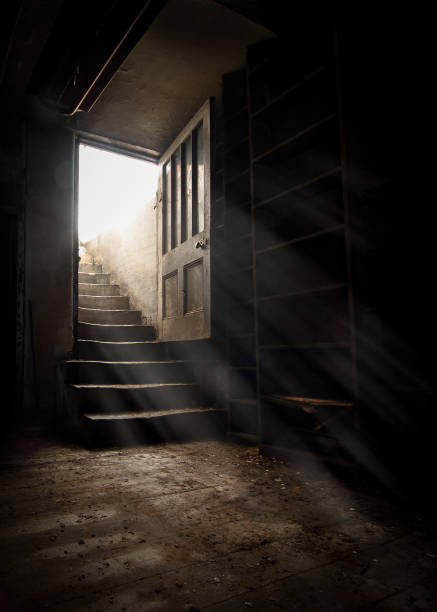
When I was twelve, my mother used to lock me in what she called The Quiet Room. It wasn’t punishment—at least, that’s what she said. She claimed it was for my own good.
The Quiet Room was really just the old basement, stripped bare. No lights except the one at the top of the stairs, which she never turned on. Just concrete walls, the smell of earth, and the dark. I remember sitting there with my knees to my chest, waiting. My mother always said the Quiet Room helped “clear the noise out of your head.”
But the problem was, the longer I sat there, the more the noise built.
At first, it was just my thoughts. My own voice, talking back at me in the dark: Why did she leave you here? Why don’t you fight back? Why don’t you scream? But then, the voice started saying things I didn’t think.
It knew things about me I’d never told anyone. It reminded me of the spider I crushed when I was six, the way its body cracked under my shoe. It asked me how long I thought my mother would last without me, if maybe she wanted me to disappear into the dark so she wouldn’t have to look at me anymore.
It was cruel, but it was clever, too. Sometimes it would imitate my mother’s voice, telling me to come closer to the wall, promising me she’d let me out if I just pressed my ear against the damp concrete. I knew it wasn’t her, but I still did it. And I swear—God help me—I heard whispering from the other side.
I’m thirty-one now. My mother died two months ago. Lung cancer. At the funeral, all the relatives said the same things: how kind she was, how gentle, how patient. They didn’t know about the Quiet Room. I thought about telling them, but every time I opened my mouth, I felt that old familiar buzzing in the back of my head—the same noise that filled the basement.
Last week, I went back to her house to clean it out. It felt wrong walking in, like the place was holding its breath. I almost didn’t go down to the basement, but some part of me had to see it again. The Quiet Room.
It was smaller than I remembered. The walls closer. I ran my hand along the concrete and froze when I felt grooves—faint, deliberate scratches in the wall. Not random marks. Words. Dozens of them, layered over each other, some so faint they were almost gone.
Most of them were mine. I recognized my own handwriting, carved into the stone with fingernails and desperation. But others weren’t. Different angles, different depths, different voices, all saying the same thing in different ways.
I’m not alone down here. It’s hungry. Don’t listen. Don’t look at the wall.
The last message was fresher, carved so deep it cut through the concrete into the brick beneath. It wasn’t mine.
It said:
WELCOME BACK.
Now the noise in my head doesn’t stop. It’s louder than it’s ever been, crowding out my thoughts, filling every corner of silence. I don’t need the basement anymore. The Quiet Room came with me.
And last night, as I lay in bed staring at the ceiling, I realized something.
It isn’t in the walls. It isn’t in my head.
It’s learning how to use my voice.


No comments:
Post a Comment