Stories that are collected from the depths of the unknown or spawned from the deep recesses of my mind...
Tuesday, March 17, 2015
The House That Death Forgot
Melinda hated driving at night. She did her best to avoid it. Short trips to the store if she just realized she ran out of tampons or had nothing for dinner after getting home — that sort of thing happened now and then. But she did her best not to go out after dark unless someone was coming to pick her up.
So, naturally, she found herself on the longest drive of her life tonight, with no moon, few stars, swirling clouds above her, and acres of forest on either side.
As so many unpleasant things in her life, this was her father’s fault. She hadn’t seen or spoken to the bastard in fifteen years, but just after falling asleep tonight…no, that was wrong. It would be yesterday by this time. Out of the blue, her phone rang, and his voice was on the other end.
"I need you, Mellie. Please come, now."
He’d said just that, and then the line went dead.
The old ass was probably drunk, but he’d never called her before — not since she was a child and he was still trying to convince her mother to take him back. It felt like she had been dreaming — waking up to hear his voice again after all these years. It sounded like he was crying. His voice sounded just the same as the last time she’d heard it.
As though in a dream, she had risen, dressed, and gotten in the car. She was well out of town and halfway to his old place before realizing that she had no way of knowing if he even still lived there. She received updates from her mother from time to time over the years about where he was. The last time she heard from her mother about him was seven years ago. Had he ever stayed in one place that long?
Not to her recollection. She had been seven when her mother finally had enough and showed him the door. Prior to that, a move had come every few months. The house they had been living in was their longest stay in one place; a full sixteen months. It turned into two years after that, and then the next house had been the one she left when she moved out on her own. In all that time, she heard from him sporadically at best, and had finally decided it was best to simply forget about him.
Until tonight.
She had found out after a two-hour drive that she had been right to wonder if he was still in the same place. His last known address was a sketchy apartment in a low-income area of the town she had grown up in. Had he been number 24 or number 42? Maybe he was 14. It definitely had a four. It didn’t matter. His name wasn’t on any of the buzzers.
Bastard! Her drunk of a father had called her at night, all but demanding she come to him for reasons he didn’t even feel were important enough to tell her over the phone, and then just expected that she would know where he lived now.
In a flurry of rage, she turned and marched back to her car, slamming the door and starting off in the direction she came. She was so angry she didn’t even look where she was going and missed her turn-off.
The next thing she knew, she was on this lonely stretch of road. Cars were sparse, but she took some comfort in the fact that she would pass one every half-hour or so. Her dashboard clock now read 2:27 AM. She had been driving for more than five hours since leaving her house. At night.
Every five minutes or so, she checked her cell phone. Ever since realizing she was lost, she had checked her phone and found no bars at all. She even stopped at a gas station (closed, of course), just sure there should be some service around here somewhere, but nothing.
Take stock of your life, Mellie, she thought. You’re over thirty, you hate your job, you and your mother don’t get along, you haven’t seen or spoken to your father in just under half your life, you have no time for your friends or a relationship thanks to the aforementioned job you hate, and now here you are, trapped on a road you’ve never been on before, at night, and you can’t even so much as call AMA let alone check Google Maps. Smart lady you are.
She briefly considered stopping and flagging down the next car that passed. She quickly realized the futility of that plan. Any car on this road would also have no service. So there was nothing for it. She’d have to drive until she saw a house. She’d feel bad for waking someone up, but there was no choice. She needed to find her way back to the main highway.
But so far, all that she could see on either side was trees. Mile after mile of trees. No lights shining through the boughs. No sign that anyone had ever been here before except that there was a road and people were obviously still driving on it.
There weren’t even any road signs other than the mile markers. Had she really found the middle of nowhere? She was just in the middle of this thought when her headlights illuminated something just up the road; a square, wooden sign — obviously made by someone other than the government. This wasn’t a gas/food/lodging sign, or a mile marker, or a distance-to sign. This looked like the kind of signs advertising a private business was nearby. She slowed down to read it.
Granny Royce’s Road House
Come stay the night at Granny’s!
She’ll take good care of you!
Room! Board! Low Prices!
Next Exit!
Her heart sped up. She certainly wasn’t interested in spending a night at Granny Royce’s, but every business had a phone. At the very least, she’d have a map, or know the way back to the highway. She decided she would stop there.
She almost missed the turn. Granny Royce’s Road House was buried at the back of a long, dirt driveway, secluded amid the trees. She was almost past the little dirt “road” that led back to it before realizing it was there. She skidded to a stop and turned in.
The little house lay ahead. It was two stories and looked to have about eight to ten rooms. Big for a home but small for anything announcing room and board. She got closer and looked for a vacancy sign. Nothing. It wasn’t that the sign wasn’t lit; there was no sign. The porch light was on and the front of the building was illuminated by that light and by her headlights. No signs of any kind.
She almost wondered if she’d gotten the wrong place, but she was certain that she had seen no other exits between this house and the sign announcing it.
She paused in the driveway and took out her cell again. Still no service. She did a quick search for any available wireless signals. To her complete lack of surprise, there were none. Not even any secured.
There’s no one here but me, she thought.
At this point, she wouldn’t be surprised to find the house empty as well. But the light was on and this was supposed to be a road house. Someone would be manning the front desk.
She got out of the car and headed for the front porch. As she turned around to make sure the lights flashed when she hit the lock button on her fob, she thought she could see a flash of movement in the trees. Something human-shaped. She stopped and looked again. Nothing. She decided she imagined it.
At the front door, she hesitated. If it really was a road house then she should be able to just go on in. But what if she got the wrong house? If she tried the door and just walked in, she could find herself arrested out here in Buttfuck, Nowhere.
Cautiously, she tried the knob. It turned. She pressed gently on the door. It opened. Relief flooded through her when she saw that she was in a small, but tastefully decorated foyer that had obviously been repurposed as an admissions area. A quaint desk with an honest-to-god guest book had been placed in the far right corner and some chairs had been set out, along with magazines on a table. She read the titles briefly—Mademoiselle, Blue Book, The New Country Life, Arts & Architecture—before turning her attention to the little desk.
There wasn’t a computer. That was a cute touch. It was like the house was from a past era. Perhaps old Granny Royce really didn’t like modern technology. There was, however, a little bell, just like there would have been in 1929. It wasn’t even the round silver kind you slapped to ring; it was a little porcelain hand-bell. This place was starting to out-cute her.
Please let her have a phone, and please let it use the numberplan, not 50s exchanges.
She picked up the bell and gave it a shake.
For a while, nothing happened. Then she saw a light come on in the back room and the shadow of an old woman sprang up on the wall. The shadow moved toward her and within a few seconds, she saw its owner: Granny Royce, who perhaps looked like every grandmother in every storybook ever.
"Well, goodness me," she said. "My lands. Good morning deary. Pardon my tardiness but it’s been a while since we got guests at this hour. Can I take your name, honey?"
Granny Royce was smallish, her grey hair tied in a neat bun behind her head, a dress that would have looked like it belonged to a senior citizen in the twenties, and a faded pink sweater. Melinda thought that she looked just like she would have wanted her own grandmother to look like, but her mother’s mother had died when she was young, and she’d never met her father’s mother. It almost hurt to deny this sweet little woman her business, but nevertheless, she had to get home.
"Actually, I’m sorry," she began. "But the fact is I’m lost. I’m not even sure where I am in the direction of…"
"Oh, you poor thing," said Granny Royce. "You just sit down and let me fix you some tea, or something. You must be cold."
"Really, thank you, but I’m okay," Melinda said gently. "I just need to use the phone, if I could, or if you’ve got a map, even that would be lovely. I really only live a couple of hours from here…"
She trailed off, not knowing if she was even right about that. She easily could have driven those five-plus hours in the wrong direction entirely.
"Oh dear," said the little woman sadly. "I’m sorry, honey, but the phone lines are down. As for a map, well…I used to have one, and if I look I still might, but it’s probably quite out of date by now. The highway moved since then, I know that much."
Melinda’s heart sank. How could her luck get any worse? No phone, cell or land line, and no map. What could she do? She had to get back home. She was expected to work at 8 AM tomorrow. And why were the phone lines down? The weather was coldish but clear. Were they fixing a line nearby?
She told Granny Royce the name of her town, but Granny only said “Believe it or not, I’ve never heard of that town. What did you say the name was?”
She told her again.
"No, doesn’t ring a bell. I’m sorry. But I could not say which direction it’s in. Why don’t you stay the night, sweetie. I’ll give you a discount for your trouble."
"Thank you. That’s very kind of you. But I have work tomorrow and I need to get back home. I’m not even sure why I’m out tonight. The only reason I had doesn’t seem to matter anymore."
"Honey, I wouldn’t advise trying to drive back that far tonight," Granny Royce said. "Why, it’s almost three in the morning, and you’ve not had any sleep. Maybe the lines will be up in the morning, and you can call your work and let them know you’ll be late."
"That won’t work, either," she replied. "I’m the opener. No one will be there. No, I’m sorry, I’ve really got to leave. I’ll head in the other direction until I find the road I was on."
At that, Granny Royce’s expression, already one of kind concern, seemed to shift somewhat — to one of fear. She paused, looking at Melinda as though she wanted to say something else to keep her inside. Finally she said, reluctantly, “Alright, honey, if you’re sure. Just you be careful, now. Don’t speak to nobody until you’re back on the road.”
That last warning seemed a little silly. After all, what was Melinda, a little girl? She thanked Granny Royce for her kindness and headed back to the car. About halfway to the car she remembered thinking she saw something moving in the trees. Her eyes scanned both sides of the secluded little cleared area she was in, looking for anything that appeared to be moving on its own rather than being blown by the slight wind. She saw nothing. Satisfied, she headed for her car. All four tires were flat.
Goddammit!
She leaned down and saw long slash marks on each tire. Someone in this little slice of Green Acres had slashed her tires in the time it took her to find out that she had no way of contacting anyone tonight.
Kids from a local farmhouse, gotta be, she thought grimly. Nothing else to do, so you might as well go out at night and slash tires.
She stopped and let the reality sink in. She wasn’t going anywhere tonight. She had no choice now; she had to stay the night here until morning, when hopefully the phone lines would be up and she could call someone from work to ask them to go in for her, and then AMA to get her tires dealt with. She sighed and walked back in the house. She could hear Granny Royce as she was walking back to her room. She had already turned off the lights. Resigned to her fate, Melinda rang the little bell again.
"That you, miss?" she heard Granny Royce call.
"Yes, it’s me," she answered. "Sorry to be a bother. My name is Melinda Orton. Sorry I never mentioned it before. I guess I will take a room for the night, if the offer’s still good."
"Oh, of course it is, deary," said Granny Royce, re-entering the room and turning the lights back on. "Melinda. Oh, that’s such a pretty name, honey. Well. Let’s get you situated. You put your name and arrival time in the book there and I’ll get you a key. All the boarding rooms are on the second floor, and there’s only a couple left."
"There are others here?"
This was surprising. Not a single car had been in the front lawn when she pulled in.
"Oh, yes, Miss Melinda." Granny was puttering around in the adjacent room. "Mr. Norris, young Calvin, there’s a few of us here." She came back out with a key in her hand. "Just out of curiosity, what made you change your mind?"
She seemed to brighten as she asked the question, as though relieved that Melinda would stay after all
"Oh, it’s probably just local kids getting kicks," she said. "But I found my tires slashed."
Granny stopped suddenly, her face twisted with concern and worry. Then she resumed, as though nothing was wrong.
"Nothing to be done for it, I suppose," she said, with an err of sadness.
"Well, not until morning, at any rate," said Melinda. "Then hopefully the lines will be up."
"Oh," said Granny Royce, distractedly. "Yes, hopefully."
She led Melinda up the darkened staircase into an empty, quiet hall. Or perhaps not so quiet. From one end of the hall came the muffled sound of someone crying. Whoever it was was crying softly — not with anger or petulance or fear, but with deep sadness. It sounded as if crying was something this person was used to, but they were still unable to stop.
"Who is that?" she asked, pointing in the direction the crying was coming from.
"Oh, pay that no mind, honey," said Granny. "That’s just Mr. Norris. He’s been like that a while. Older man, you understand. Not all there." She tapped her temple.
"I understand," Melinda replied, but wondered privately how an old, out-of-touch man would wind up at a road house. "Has he been here long?"
"A while, I’d say," answered Granny. "Don’t really recall how long, exactly."
How does he pay for room and board?
"I guess he doesn’t drive," she said to the old woman.
"Actually, it doesn’t look like anyone else here has a car."
Granny started at this, looking up with an almost guilty expression. “Oh, well,” she said. “That kind of thing is the business of the guests. I don’t ask about such things.”
She turned the key in the lock of the room she had led Melinda to, and opened the door. Turning on the light, she showed Melinda the quaint little room. Melinda thought it looked like stepping into the past. She could swear this room would have looked modern in the early fifties, at the earliest.
Come to think of it, so could the rest of this place, she thought. No wireless service, no computer, that old bell. And those magazines, they looked new, but…
That thought was cut off as Granny put the key on the nightstand and started in with instructions.
"Now, the bathroom is down the hallway there. You’ll be sharing with the whole floor, so please bare that in mind if you have to go. There’s a shower schedule on the door, as well. First come, first serve. You just add your name to the first available line and that’s the order the showers are in. I wouldn’t worry about that if I were you, though. I’m sure you’ll be first in line. I get up at 6 AM sharp every morning and start breakfast, but you come on down whenever you’re ready and I’ll whip something up for you.
"Oh, and one last thing, my dear. I would strongly advise you not to leave the house until sun-up. You just never know what could happen out there. In the dark."
"Of course," she replied. I’d never go out there in the dark if I didn’t have to…
She stopped that train of thought right out of the gate.
After a few moments, she was alone. Alone, without anything to wear to bed, and nothing to shower, brush her teeth, or hair with in the morning. She sat on the bed and looked out the window, which faced front. Her car still sat where she had left it, the only thing for miles that seemed like part of her world.
And an expensive, over-large paperweight until I can get a hold of someone, she thought bitterly.
Despite the homeyness of the room, she felt an unwillingness to rise and shut off the light. Somehow the thought of going to sleep in this backward little room seemed unthinkable. So instead, she continued to sit and stare out the window. A figure in black detached itself from the shadows of the trees and made its way to her car.
The hell?! She jumped up and ran at the window.
The figure was tall, and seemed to be wearing a cloak made of night. She saw as its arm extended. In its hand was a long, jagged dagger. It dragged the dagger across the side of her car, leaving a long gash-mark in the paint and metal.
"Hey!" she shouted.
The figure kept dragging the dagger. She reached for the window to open it. It wouldn’t budge. She looked for a lock, but couldn’t see one.
"Hey!" she yelled again.
This time the figure raised its head. She could see the glint of two eyes under the hood. The figure raised the dagger, slowly, determinedly. It pointed it straight at her face. She leaped away from the window and ran for the door. A noise on the other side stopped her. Footsteps. Dragging, shambling footsteps. And crying. The sound of a person for whom deep, longing sadness is a way of life.
Mr. Norris!
She waited. Somehow, she just felt that she should let the old man pass before she opened the door. Before he got very far, however, she heard other footsteps - these much quicker and lighter — run up the stairs and stop near the door of her room.
“Stop it!" hissed Granny Royce. "Go back in your room right now! You know better. She can’t see you yet. Hopefully she won’t have to at all. Now you go back in there. You’ve got no business being out at this hour anyway."
What on Earth?
How could that sweet old woman talk to another human that way, let alone an old man with a foggy mind? She almost opened the door right then, but somehow her hand stopped, and waited until the shuffling, crying man had made his way back down the hallway. She heard his door open. She opened her own door just in time to see his foot, shod in a well-worn house-shoe, slide into his room. The door closed softly after him.
That poor man, she thought.
But now she was determined to find out what was going on. The punk outside in the Halloween costume slashing up her car followed by Granny yelling at an old man made her begin to understand that not all was well here. She went back down to the front desk area, which was completely unlit except for the moonlight and porch light coming through the window.
There was, however, a light on near the back room that Granny Royce had emerged from before. Melinda paused to take a look outside the front window. The maniac with the dagger was nowhere to be seen for the moment, but she was now determined that it was he that she had seen moving through the trees.
He could have killed me!
She strode in the direction of the light, seeing that it was the light to the kitchen. She kept going, expecting to find Granny Royce still puttering about with whatever an old inn-keeper did with herself during the early hours of the morning.
Instead, she found Granny sitting with a young man of about twenty. He had dark hair and a scruff of stubble and was wearing a dark brown corduroy shirt and khaki’s, along with a pork-pie hat. He looked like he was ready to go sell newspapers on a street-corner in the thirties. He was quietly sipping tea while Granny was admonishing him from the other end of the table.
"Now that was a horrible thing to say!" she said. "When I was your age, young men minded their manners!"
"That’s a laugh, talking about my age," muttered the young man with a sneer. "And just how old are you? Do you even remember?"
"Calvin Davidson, you are trouble, young man," she hissed back. Neither had noticed Melinda yet. "One of these days you’re going to say something you’ll regret."
"Oh, come on, Granny, what could I possibly say that will make things worse than they already are?" demanded Calvin. "I mean, look at old Mr. Norris up there! Both of us are ol…um, hullo, miss. I didn’t know we had anyone else here." He had just seen Melinda.
"Uh, hi," she said.
She had the feeling she’d walked in on an old argument the two of them had had many times, and that did not concern her. Her fear and anger were forgotten for the moment. Calvin had been talking to Granny like a sullen kid, but something about what they were saying seemed…wrong.
"Can I help you, Melinda?" asked Granny Royce. "Is there something wrong with your room?"
That brought her back. “No,” she said. “The room is fine. But nothing else is! I mean, what on Earth do you even have a road house out here where it seems like no one ever stops? Why are most of the rooms full even though mine is the only car out there? Why did I hear you talking to Mr. Norris like he was a dog? And why would you want to make sure I didn’t see him?”
She got no further before Calvin cut her off.
"Good lord, she’s not even been here a night and she can see it. Why did you even let her in, Granny? Why don’t you just bolt the door? Hell, if I could go take down that sign don’t you think I would have, by now? Lord love a duck."
There’s something you don’t hear many young men say, thought Melinda. She decided to ignore Calvin for the moment, otherwise.
"And besides that, there’s someone out there! He’s the freak who slashed my tires and he’s been out there messing up my car since then! And you can’t even call the police! Are you gonna tell me you’ve never had vandals out here before?"
There was a long pause in the room. Neither Granny nor Calvin seemed willing to break it. Calvin scratched at his neck. For the first time, Melinda noticed a red slash at his throat, half-hidden by his collar. It looked like either a very fresh scar or a slightly healed wound.
"Listen, miss, I don’t know your name," he finally said.
"Melinda," she told him.
"Melinda," he repeated. "Melinda, I think you should sit down. I have to tell you something that you may find…troubling."
Melina did not like how he said that. She also didn’t like the way his tone had switched from sullen child to serious adult. He looked several years her junior but he was talking to her like he was her uncle, or her boss. He swallowed a sip of tea and sighed.
Then he looked her straight in the face and said: “The reason I don’t have a car out there is that when I got here, no one my age, no one in my line of work, would have owned a car. It would have seemed like an impossible dream.”
"What…what are you talking about?" she asked, hesitantly.
"I worked in a textile mill," he said. "The mill was shut down by the time I got here. Most businesses were. So I struck out on my own; a drifter looking for what work I could find. And I stopped here. Forever."
"Businesses were shut down…I don’t understand," said Melinda. "We’re having a rough time of it right now, but businesses are mostly staying open…"
"Not then, they weren’t," said Calvin, sadly. "I arrived here…in 1929."
Melinda blinked. Something had exploded behind her eyes.
"This place was new then," said Granny. "My man and I had just opened it. And young Mr. Calvin was a sweet young lad of sixteen. I offered to take him on as hired help over my husband’s objections. Well, my husband was a well-meaning man, but he knew how to pinch a penny. T’was a year after I took Calvin on that Mr. Royce died. Calvin and I have been here ever since. And every few years or so, someone joins us."
"Yep," Calvin broke in. "Miss Tillie was first; she was a woman of ill repute who ran here, pregnant and scared that the man who’d run her trade up in New York was gonna find her and kill her. She and that baby…"
He broke off, now seeming on the point of tears.
"And then," said Granny, "there was Mr. Standish. He was a traveling minister. He doesn’t travel anymore."
"Mr. Norris got here in ‘69," said Calvin. "His story is probably the worst. He was a…well, he was a bank-robber, you see. Carried a pistol. And he didn’t like learning how long we’d all been here." He paused, stood and walked to the kitchen window. "He tried to leave on his own, you see. He ain’t the first to try it. That was me, actually. I warned him not to try, but he wouldn’t listen. But when he got outside…and he met him…”
"Calvin!" hissed Granny. "We don’t talk about this!"
"She’s gotta know," said Calvin. "There’s no point in her finding out slowly."
"There’s still a chance for her!" said Granny in a stage whisper. "All she has to do is wait until morning…"
"She’s not going to wait until morning," said Calvin with some remorse in his voice. "No one ever waits until morning. The fact that she came down here is proof enough of that. Besides, what good would that have really done her? Her car is useless. We have no phones here. There was no phone when this place went up and there won’t never be a phone here. You know that."
"Okay, everyone, stop!" Melinda shouted. "That’s enough! Now, you can’t keep me prisoner here and I have no intention of staying any longer. Only that knife-wielding maniac out there is keeping me from running up the road this minute! Now, I need to know what’s really going on here and I need to know it now!"
"We’ve been telling you," Calvin said. "Granny may not want you to know everything, but you need to. Because you won’t be leaving. Oh, we’re not trying to keep you prisoner. I don’t even care if you run out that door right now. But you’ll never leave this house again afterward."
"Like hell I won’t!" yelled Melinda.
"Listen, child!" said Granny, rising from her spot at the table. "Listen, please! None of us mean you harm, my dear, not even Mr. Norris. There’s scant he can do anymore, and he knows it. That’s why he’s up there crying all the time. But we’re stuck here, all of us. I hoped there was a chance for you to run for it in the morning, but Calvin’s right. There’s no guarantee you’d be safe in the morning, anyhow."
"What…the…hell…is wrong with this place!?” choked out Melinda.
She was beginning to break down. she could feel the tears welling in her eyes.
"It was about a month after Mr. Royce died," said Calvin. "When he came. He was wearing that long, black robe and carrying that ridiculous dagger. I saw him when I was trimming the hedges in the back. I told him he needed to get out of here, because I didn’t like his look. He…he moved so fast I never saw it coming. And he got me, from here…” Calvin touched his neck. “…to here.” He touched his lower abdomen on the opposite side from the neck slash. He began to undo his shirt. Melinda almost vomited. Under his shirt was a long, ugly slash that went deep…and was still seeping blood. She could see bone, muscle and intestines wriggling within that mangled ruin. “I died that night,” said Calvin.
"But then I didn’t. The next thing I knew, I was being dragged into the house by Granny, and when I woke up, I nearly scared her to death. She was sure that I was gone. The thing is, I was. But I was awake. I could talk, walk, do anything I could while alive. Well, except take any enjoyment or nourishment from food or drink anymore. I still drink that tea because it keeps my skin from turning ash-grey. I learned that about fifty years ago."
“He didn’t go away, though,” Granny broke in. “I went out to deal with him, carrying my axe. He took my axe and buried it in my back. I won’t show you the wound, honey. Calvin shouldn’t have shown you his, either. No one should have to see it.”
"But that’s how he works, Melinda,” continued Calvin. “He’s got that knife, but if you try to use a weapon on him, he just…moves like he does and takes it from you. You never stand a chance. He’ll use whatever weapon you try to take him down with to end you. Mr. Norris learned that the hard way.”
"This…this is not happening!" Melinda was ready to break down. She had to hold it together. She had to get out of here, somehow. Nothing about this was right. Nothing about it could be real.
It was all a dream; too much didn’t make sense. Her father calling her out of the blue. Her leaving to go to him without a second thought. Getting lost so quickly, and so irreversibly. No cell phone service anywhere on this road. This place, everything about it! She was dreaming; that had to be it. But if so, she was going to survive this dream. She turned and ran for the stairs. Her purse was still in her room, but she was going to grab it and go. She’d had enough.
Protesting voices began babbling behind her; she cared not one whit. Mr. Norris was waiting at the top of the stairs. Contrary to Granny Royce’s description of him, he was not old at all. No more than about forty.
But she saw instantly what she meant by “not all there”. The top half of Mr. Norris’s head looked normal, like a reasonably attractive man with dark hair peppered with grey here and there. His eyes, a clear green, were moist with fresh tears. The lower half of his face was a ruin of bone fragments, shredded muscle and blood. So much blood. His left side was similarly destroyed. His arm hung on a few hanging strings of muscle, his hip was just as much a mess of bone and blood as his face was. He kept his one good hand on the bannister as he shuffled toward her. Behind him stood a young woman in a bra and a pair of panties. Her stomach was cut open, and looking out of the wound with bright, intelligent eyes was the mangled remains of a baby.
Melinda turned and bolted for the front door. Her hand had just closed around the knob when Calvin rushed up to her, placing his freezing cold hand over hers.
"They’re not going to hurt you," he said quickly. "But he will. If you step out for so much as a moment, he will kill you, and it will hurt. And it will go on hurting. Forever. After a while you learn to function with the pain, but it never goes away.”
Sobbing, she asked the question she’d been afraid to ask since coming here.
"Who is he?”
"We don’t know," said Granny, from behind Calvin. "He just…came here, and he won’t go away. He likes to watch us, and do things to incite us to come out again. As soon as someone does, he hurts them more. But no matter how many times he kills us, we don’t die. Believe me when I say, we all wish we could.”
Melinda had had enough of this. She pushed Calvin away and threw open the door. He was standing on the porch. The knife was held out in front of him, just at face-level. Melinda ran into him at a rush, the knife puncturing her right eye and its tip sliding on through, out the other side. She just managed to see the grinning, pure-white face of her killer, before everything went black.
A few hours later, the house erupted with screams from upstairs as Melinda awoke to a world of pain, the like of which she’d never known.
Monday, March 16, 2015
Listers Rache
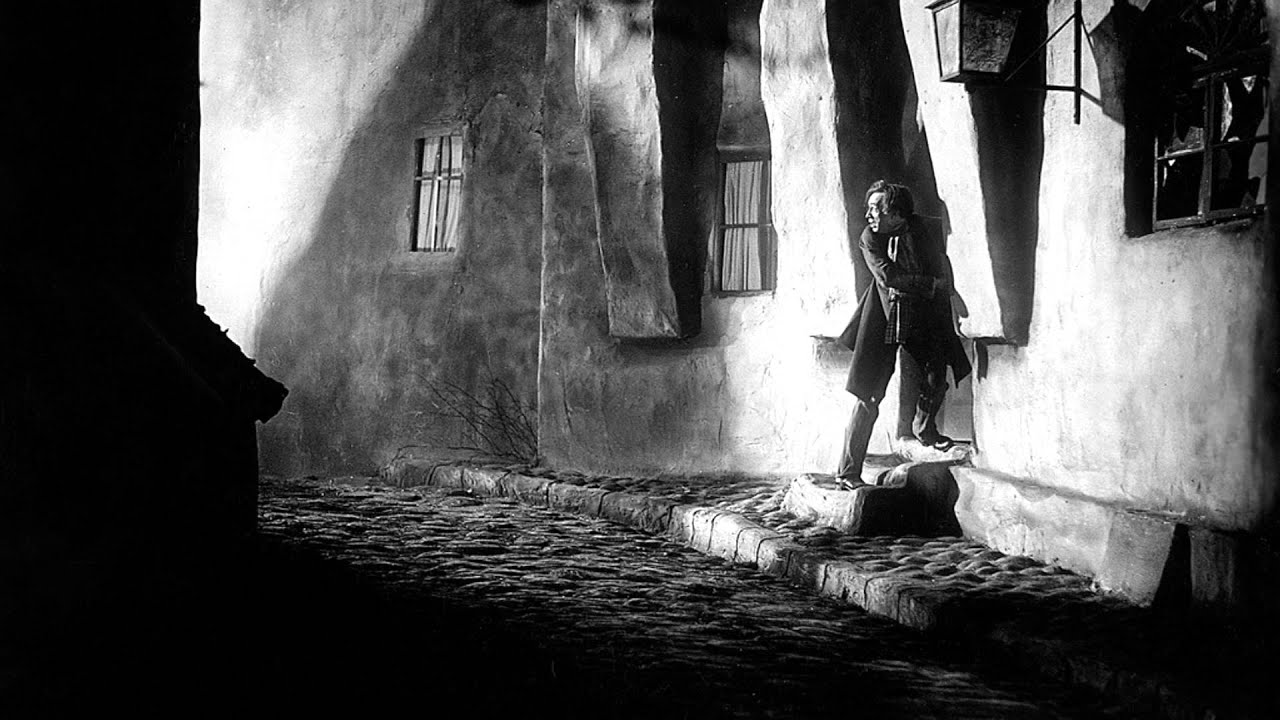
It may be hard to believe for those of us born in the digital age—when every embarrassing moment can potentially be uploaded to Youtube for posterity—but an estimated 70% of all films from the silent era are thought to be lost. Of the silent film directors whose works have largely vanished, perhaps the most intriguing, at least for me, is the German director Kai Winckelmann (1887-1926). Although influential in his own era, he has since been largely forgotten, for reasons which I believe will become readily apparent if you read further in this article.
Winckelmann was born on September 18th, 1887 in Offenbach am Main, the son of a butcher. He reportedly found the family business very distasteful and did not get along well with his father, who drank heavily. After serving on the Russian front in World War I—a period of Winckelmann’s life which left him permanently traumatized—Winckelmann married a certain Greta Schulz, a nurse whom he had met at a veteran’s hospital. He moved with her to her home city of Vienna, Austria, where he began making films for the pioneering producer Joe May. Winckelmann created many moderately successful films while working for May, several of which survive in whole or in part, but by far his most successful work was the Lord Lister serial.
The Lister series, based on a series of pulp stories concerning a gentleman thief named Lord Lister who goes by the nom de guerre Raffles in the criminal underworld, consists of six episodes, each about an hour in length. The films bear a somewhat superficial resemblance to their source material. In the original novels, as in the first two episodes of the Lister serial, Lord Lister is a somewhat sympathetic Robin Hood-like figure, à la Arsène Lupin, who rarely commits any particularly egregious misdeeds. In Winckelmann’s Lister serials, however, he became a much more sinister figure: a seemingly omnipotent mastermind of crime who is not above rape and mass murder. In the serial, as in the novels, Lord Lister is pursued by a Scotland Yard detective named Baxter. In the early installments of the serial, Baxter is portrayed as a figure of fun, an incompetent drunkard who is always outwitted by the master thief, but in the later episodes, Baxter becomes a tragic figure, an honest lawman who is helpless to prevent the atrocities of his implacable persecutor, Lord Lister. Although Lord Lister was played by several different actors—the idea being that his true face was unknown—Detective Baxter was always played by Winckelmann’s friend and confidant, actor Olaf Schneider.
Olaf Schneider became close friends with Winckelmann shortly after the latter began working with Joe May. The two could not be any more different in appearance or in temperament: Schneider was healthy, muscular, and a lover of fast cars and boxing, while Winckelmann was a recluse and often in poor health. Nevertheless, the two shared a close relationship, perhaps finding common ground over the tragedies in their respective pasts: Winckelmann had had an abusive childhood and was left mentally scarred by his service in World War I, while Schneider’s wife had committed suicide in 1918, leaving him to raise their infant daughter alone.
The contents of the first five Lister films, insofar as they can safely be reconstructed at all—only one of them survives, and even then only in an incomplete print—are as follows:
1. Lister tritt ein (Enter Lister): The screenplay of this first episode was written by none other than legendary director-screenwriter Fritz Lang. In this installment, Lister, who is living under the assumed name Lord William Aberdeen, manages to steal a valuable painting during an art exhibition. The bumbling Detective Baxter eventually manages to arrest Lister, but the latter escapes, switching identities with a guard in a clever ruse. A spectacular chase scene ensues, during which Lister, of course, escapes.
2. Lister schlägt zurück (Lister Hits Back): The film opens with an elaborate scene where Lister steals the pearl necklace off of a duchess’ neck at the opera house. Shortly thereafter, Lister boldly announces his next crime via a newspaper advertisement: he will still the family jewels of Lord Willmore at such-and-such an hour. Baxter and his fellow policeman stand guard at Lord Willmore’s side at his mansion, waiting for Lister to appear—but he never does. Just when he is about to dismiss the incident as a hoax, Baxter hears muffled cries and discovers the real Lord Willmore bound and gagged in a wardrobe; Lister had been impersonating him the entire night, and the real jewels had already been replaced with identical duplicates. Baxter realizes that the mansion is rigged to explode and barely escapes with his life. This is the only surviving Lister film.
3. Lister in Amerika (Lister in America): Detective Baxter receives a tip that Lister is hiding in the United States. Baxter boards an ocean liner, but half-way across the Atlantic, the voyage begins to go horribly awry: the passengers are falling mysteriously ill. It seems that Lister has planted plague-infested rats onboard, presumably in an attempt to assassinate Baxter. Upon his arrival in New York, Baxter is swiftly arrested for a series of murders that Lister committed, and a local judge, really Lister in disguise, sentences him to death by hanging. Baxter makes a desperate escape through the sewer system and emerges into the night air—where he is greeted with the sight of Lister taunting him from a rooftop. He is wearing his iconic costume: a black cloak, black gloves, and a black executioner’s mask. Lister mockingly crosses and extends his wrists, as if daring Baxter to arrest him.
4. Das tödliche Parfum (The Deadly Perfume): Detective Baxter investigates a series of grisly murders: someone has been replacing department store perfume with sulfuric acid, resulting in dozens of deaths and disfigurements. In order to uncover the truth, Baxter forms an alliance with a young woman who claims to have been Lord Lister’s lover. Despite being a married man, Baxter soon begins to succumb to her charms as well. The film ends with a shocking scene: due to the machinations of Lister, Baxter is forced to allow the young woman to be run over by a train in order to avert an accident that would kill hundreds of people.
5. Die schreiende Leiche (The Screaming Corpse): Little is known about the contents of this particular film, as contemporary reviews contain little but exclamations of disapproval. It is known to chronicle Baxter’s descent into alcoholism and depression after his repeated failures to capture Lister. The plot reportedly involved a deadly fire at an opera house and a surreal scene wherein Lister wears a man’s flesh as a mask.
Despite, or perhaps because of, their often morbid content, the films were quite popular with the contemporary viewing public—one might consider them the Saw of their day. As you might have guessed, the increasing darkness of Winckelmann’s films was accompanied by a corresponding crisis in his personal life: the affair between Winckelmann’s wife, Greta, and his closest friend, Olaf Schneider. Winckelmann seems to have known of the affair and tacitly accepted it, although eventually, this seems to have taken a considerable toll on his already fragile psyche. In a letter to his cousin, dated October 13, 1923, Winckelmann writes: “…And why shouldn’t she prefer him? A man like him can offer her what I, with my frail body and lacerated soul, could never hope to give her. My dark Muse has seized control of my life. I am powerless to do anything but obey its commands…”
This state of affairs continued for some time before an unthinkable tragedy put an end to both the Lord Lister serial and Winckelmann’s partnership with Schneider…at least for the time being.
In December of 1923, Winckelmann was away on business in Frankfurt, having left his 18-month-old son alone with his wife. The live-in housekeeper was away visiting her sister. According to the report that a distraught Greta later gave the police, she and Schneider were making love in the bedroom when suddenly she heard a loud thud from the child’s room. Her son had evidently climbed out of his crib, breaking his neck. Naturally, this created a gigantic scandal, and no one was particularly surprised when Greta disappeared one day, presumably to start a new life under an assumed name. As for Schneider, he emigrated soon thereafter to the United States, where he dropped out of the public eye.
Despite the horrendous personal tragedies that had befallen him, Winckelmann held up as well as could be imagined under the circumstances. Although he had been a doting father—at least when he was not distracted by his film-making career–he managed to bear his grief with a certain quiet dignity, even founding his own film company a few months later. Winckelmann’s studio was relatively successful at first, turning out several lucrative if unremarkable films. A few years after his son’s death, however, strange rumors began circulating around Winckelmann. It was said that he had fired most of his staff and spent his days wandering around his empty, decrepit Filmstadt. In an interview with the Vossische Zeitung dating to six months before his death, Winckelmann claimed that he had fully forgiven Schneider and, rather surprisingly, had been corresponding with him and planned for them to make a film together. To the surprise, and later dismay, of the viewing public, a final installment of the Lord Lister saga, entitled Listers Rache (Lister’s Revenge) was released in 1927.
Listers Rache was screened in only a few theaters before being permanently withdrawn from circulation. The film, only 40 minutes long, was much more surreal and expressionistic than any previous installment in the series—and much more unsettling. Contemporary accounts, though doubtless exaggerated, mention fainting fits and worse at advance screenings of the film. According to contemporary newspaper reports, the film begins with an intertitle explaining that Detective Baxter has lost his job with Scotland Yard and been abandoned by his family. Baxter is shown in a dirty, disordered apartment room, sitting at a writing desk; there is no other furniture around him. Baxter is writing a note whose contents we do not see and weeping all the while. He is surrounded by empty beer bottles and his appearance is unkempt and disheveled. The crying scene continues for an uncomfortably long time, after which Baxter leaves his apartment and wanders through the streets of London. The city is represented by a series of surreal matte paintings, reportedly very much in the style of Das Cabinet des Dr. Caligari, full of absurd angles that would be impossible in reality. Sinister shapes can be discerned in the background: hanged bodies, weeping, disfigured faces, etc.
Detective Baxter finally pauses in the middle of a tall bridge, contemplating the rough waters and jagged rocks below. It is clear that he is considering suicide. Suddenly, a dark shape materializes at the other end of the bridge: it is Lister, wearing his usual executioner’s hood and cloak. Lister shouts “Jump!” (via an intertitle, of course), and Baxter, after a moment’s pause, manages to gather his resolve and chase after his nemesis. After a brief chase scene, Lister leaps into an enormous sinkhole, Baxter following close behind. In the next scene, the detective finds himself in an enormous cavern—presumably the master criminal’s base of operations. It becomes clear that the cavern is filled with furniture: a dining table with chairs, a wardrobe, a wash basin, even a book case. Baxter cautiously approaches the table, soon realizing, to his horror, that all of the furniture appears to be made of human bone. In the center of the cavern is an enormous pile of human body parts, casually stacked together like a compost heap. Baxter recoils in horror and attempts to run back to the entrance of the cavern, but it is too late: Lister, with two other masked men on either side of him, is swiftly approaching, carrying an axe. We see their shadows on the wall of the cave encroach on the detective’s, finally engulfing it completely.
The scene shifts yet again; Detective Baxter is shown inside a damp dungeon of sorts, his hands and feet manacled to the wall. He is bruised and bloodied. A large metal door swings open and Lister reappears, still accompanied by his two masked henchmen. One of said henchmen is carrying a struggling, wriggling form: a blindfolded little girl, around ten years of age. Lister tells Baxter “Now you and your daughter will be reunited, just as you wished!” With that, the two masked thugs hold the screaming and kicking little girl down on the ground while Lister withdraws a butcher knife from somewhere within his cloak and calmly, methodically slashes her throat. The two masked henchmen then place the dying little girl opposite the distraught Detective Baxter. Blood is oozing from her mouth and throat, but she is still breathing slightly. Lister declares “Leave him to his fate!” and the three masked men exit the room, leaving Baxter to watch helplessly as his daughter breathes her last.
An intertitle announces that three weeks have passed, and Baxter is still chained where Lord Lister left him. His clothes are ragged, his skin is covered in bruises and blisters, and his eyes have a wild, haunted look. Across from him is the corpse of his daughter, bloated and blackened. The iron door slowly creeps open, and Lord Lister reappears, once again shadowed by his two masked accomplices. This time, he is carrying what appears to be a burlap sack. The two henchmen unchain Baxter; he attempts to strangle Lister, but, in his pathetically weakened state, he is easily restrained. Lord Lister slowly pulls an object from the sack: it is a long-haired human head, still dripping blood. “Kiss your wife!” Lister exclaims. A horrified Baxter refuses, but the henchmen punch him into submission and restrain his arms. Lister forces the severed head’s lips against Baxter’s, the latter retching all the while. Baxter is then returned to his restraints, and the two accomplices proceed to savagely beat him with nail-studded wooden planks while Lister looks on. Lord Lister motions for his men to stop the beating, and Baxter looks up with dying eyes at his tormentor, lying in a pool of his own blood. “Do you realize now why you’ve never managed to catch me? Why you could never have won?” Lister says. Lord Lister begins to peel off his hood and turns around to face the camera directly. We see his true face for the first time—or rather, the space where one should be, for Lister does not possess one at all; his face is a blank wall of flesh with nothing at all to mark it as human accept a gaping black mouth. “I am Loss,” he says, drifting closer and closer towards the camera, as if threatening to break through it. Lord Lister’s jaw opens wider and wider, far wider than should be humanly possible; it reaches almost down to his waist, as if threatening to engulf the audience and all the world. And with that image, the film abruptly ends.
As mentioned above, Listers Rache was a resounding failure with audiences at advance screenings, and it was quickly pulled from most theaters. Evidently, the film was “too much” even for a movie-going public that had made Winckelmann a wealthy man for his earlier forays into aestheticized violence. Audiences had found the film’s gore effects to be disturbingly convincing—so convincing, in fact, that many suspected that they were not “effects” at all, and a warrant was soon issued for Winckelmann’s arrest. After the police had searched in vain for Winckelmann at his home, a fire was reported at his downtown film studio. Several hours later, Winckelmann’s body, having been pulled from the smoldering ruins of his Filmstadt, was identified using his fingerprints. Though his garments were badly burned, he appeared to have been dressed in black.
The bodies of Olaf Schneider, his ten-year-old daughter, and his former lover Greta Winckelmann were never recovered.
Like most of Winckelmann’s films, Listers Rache has vanished almost without a trace. Some copies were lost in fires—an unfortunately very common occurrence, as early film stock was highly flammable—while others were deliberately destroyed. There is an interesting, though almost certainly apocryphal anecdote in Christian Eichheim’s Moderne Schauermärchen aus der Stummfilmzeit about a rediscovered copy of Listers Rache, which bears repeating here, if only for its dramatic interest. In 1974, so the story goes, Peter Fleischer, an Austrian film collector, acquired a copy of Listers Rache at an auction. After viewing the film on his private projector, he began to experience headaches, nausea, and finally hallucinations. He reported seeing a figure in a black cloak out of the corner of his eye, but the figure would vanish as soon as he turned his head. At first, this figure would appear to be far away, but it seemed to come closer over time. Eventually, Fleischer began to suffer from insomnia—the figure would stand over his bed at night, but disappear as soon as the light switch was turned on. Every appearance of this figure would cause a feeling of intense despair and dread in Fleischer. After several weeks of agony, Fleischer finally burnt the film reel in his fireplace. The hallucinations ended, but an inexplicable smell of charred flesh lingered over the chimney.
The same book also offers a rather strange urban legend concerning an alleged curse that hung over the life of Kai Winckelmann. While serving on the Russian front during World War I, so the story goes, a dying prisoner of Romani descent who had been captured after a particularly bloody skirmish cast the “evil eye” on the young Lieutenant. “The weight of the deaths you have caused will follow you like a cloud,” the man is reported to have said. Perhaps this was the “dark Muse” Winckelmann spoke of in his letters? It bears mentioning here that Winckelmann’s sketch book from his stay at the veteran’s hospital contains numerous line drawings of a faceless, cloaked figure.
Regardless of what you think of the supernatural, ask yourself this: who is more real, Hamlet or Shakespeare, Dickens or Oliver Twist, Charles Foster Kane or Orson Welles? Some fictional characters have more life in them than you or I.
Sunday, March 15, 2015
The Sandman
“Those who dream by day are cognizant of many things that escape those who dream only at night.”
-Edgar Allen Poe, “Eleanora”
***
“Go to bed and wait for the Sandman.”
Even as it came out of James’ mouth it seemed to him a strange thing to say, and he was not sure why he had, but for some reason it worked: Daniel went to bed.
The next morning, though, he asked: “What does the Sandman look like?”
James was making breakfast. Daniel sat at the table, short legs swinging under his chair. “Nothing, really,” James said. “It’s just an expression.”
“What does it mean?”
“Just something people say.” He put a plate of eggs in front of Daniel and kissed him on the top of his head. He thought that would be the end of it.
Until he saw the Sandman for himself.
He was getting ready for bed and stopped by Daniel’s room to check on him while he slept, as he often did. It was such a routine precaution that when he saw a pale, naked man sitting on the edge of Daniel’s bed, rocking back and forth, it took a moment for him to process what he was seeing.
He reacted the way any father would, of course: He ran into the room screaming, and for a moment he thought about attacking the intruder, but then the man on the bed turned, and that’s when James saw that it wasn’t really a man: It was a pale, slithery thing, hairless and warped, its joints turned the wrong way and its body out of shape with itself. When it moved it was like an insane marionette dancing on a stage.
James froze. The skittering thing watched him. He felt spreading warmth, and he realized he’d pissed his pants. Only when he remembered that Daniel was still there in bed, staring at the broken-shaped thing sitting a foot away, did he regain the courage to move. He grabbed Daniel and ran. In the hall he turned to see if the thing would follow them, but it didn’t. For a moment it watched and then, moving like a stop-motion nightmare, it crawled to the window and jumped out, leaving only the billowing curtains to mark its passing.
James had trouble talking to the police. He reported a break-in, but when asked to describe the intruder he didn’t know what to say. How could he make the ordinary man in the blue uniform sitting at his kitchen table while two of his colleagues searched the house understand a thing like he’d seen? He couldn’t even understand it himself.
To make it worse, Daniel’s memory did not correspond to James’: He described an ordinary looking burglar. “A man in a mask,” he said. James thought about it: Had it been a mask? No, it would had to have been a full costume, and an elaborate one, something like they would use for a movie. And that would not explain the way it moved…
But in the end he simply echoed his son’s testimony: “A man in a mask,” he said. “A burglar.” The lie unsettled him almost as much as what had happened.
The doctors said Daniel wasn’t hurt and showed no signs of molestation. James was relieved. They stayed at a motel for a couple nights until they felt ready to come home, and then James had a new security system installed, along with bars on the windows. He didn’t like the sight of them in Daniel’s room, but it seemed like the only thing to do.
James was frightened that first night back in the house, but Daniel, strangely, was not. When asked if he felt okay sleeping alone, he just said yes. In the end it was James who found himself wishing he were not sleeping alone. He was up all night listening for the sound of anything moving in the house. Although he had convinced himself that his memory was faulty and that it had been a normal (albeit probably deeply disturbed) man in his son’s room, when he closed his eyes even for a moment he pictured bloodless skin and a twisted, inhuman face. He found himself wondering, why my house? Why my family? He knew, of course, that there didn’t have to be a reason. But still, he wondered.
Two weeks later Daniel stopped talking. James didn’t notice at first; kids went through quiet phases sometimes. But eventually he tried to get Daniel to talk, and he wouldn’t. Eventually, it became clear that he couldn’t.
Back to the doctor they went. Nothing wrong with him that we can see, was the diagnosis. Was it the trauma, James asked? Could be, they said. Sometimes these things come on late. Children can be a mystery even to those who know them best. They recommended a child psychologist, whom James couldn’t afford. He could not, for that matter, even afford the bill they were giving him now.
Nothing seemed to help. Daniel would write out answers to questions sometimes, but never more than a yes or no. When James would ask him what was wrong, or if he’d seen or heard anything that frightened him, Daniel would only stare. He seemed furtive and bemused. James found himself missing the sound of his son’s voice. Sometimes he wanted to hear it so bad that he ached. But it seemed that Daniel would not talk again until he was ready.
James had other things to worry about, too. He was convinced, beyond reason, that the intruder was not really gone. Though the alarm never went off and the locks and bars remained undisturbed, he was sure that he heard movement in the night. Not normal movement: It was a sound like a huge snake slithering through the house. When he heard it, he imagined horrible things. Nothing was ever there when he went to investigate, though he often thought he glimpsed something just out the corner of his eye, a pale foot or a misshapen shadow that would slink away as soon as he turned.
He rarely slept, and when he did he had haunted dreams.
Soon he realized he had not left the house in weeks except to go to the bank and buy groceries. He felt hemmed in. With Daniel acting mute he hadn’t had an actual conversation with anyone in weeks, so he called his mother. The connection was bad and her voice sounded faint, on the verge of being not there at all. “I guess I’m okay, Ma,” he said, pausing to wipe the sweat from his palms and then make sure he could hear Daniel playing in the next room. “But things have been a little rough. We had a break-in.”
“Oh how awful!” Mom said. “Did they take anything?”
“Nah. Just ran off. It was weird though. I haven’t really felt comfortable since then.”
“Are you still working at that hospital?”
“No Ma, I left last year, you know that.”
“Oh. Well, have you been getting out? What about that nice woman you were seeing last year, the one who played the piano?”
James scowled. She was always asking that kind of thing. Didn’t she know how hard it was being a single father? That he didn’t have the time? He was about to say so when something made him pause.
“Ma, is there anyone else on the line?”
“I don’t think so?”
James was sure he heard it, though: the short, gasping sound of someone trying to hold their breath and failing. A cold feeling crept across the back of his neck. “You’re sure nobody is listening on your other phone?”
“Dear, there is no other phone, I’m on the cell, that’s why the service is so bad.”
“Then what is—” James stopped. If the sound wasn’t coming from her end, then…
He dropped the phone and raced to the hall. The extension hung on its hook, undisturbed. Heart pounding, he hurdled into the garage; the spare phone sat on the workbench. No one was in sight. But could they have been? Could someone have been here all along, listening to his phone call, and then slithered away? Might they be here even now?
The next day he took out the extra phone extensions. He even filled in the jacks with rubber cement. Daniel watched him work, eyes curious, but James offered no explanation.
He began giving Daniel a light physical exam every week. His CNA training was a little rusty after a year on disability, but you never really forget. It was an absurd thing to do, of course; even if there was a physical cause for Daniel’s behavior, it would be nothing he could discover this way. And he was aware on some level that it was compulsive behavior. Nevertheless, it made him feel better.
One morning James set the diaphragm of the stethoscope against Daniel’s chest, but he could not locate a heartbeat. He moved his hand in search of the right spot, to no avail. Then, to test it, he listened to his own heartbeat; it came through steady and clear. But when he checked Daniel again he didn’t hear anything. A thought came unbidden to him of the Tin Man in “The Wizards of Oz,” whose chest was empty as a kettle.
A sick feeling roiled his stomach. He threw the stethoscope down and grabbed Daniel by the shoulders, looking into his face. Daniel stared back with bright eyes. He even smiled a little, with the corners of his mouth. James felt the tingle of tears. He swept his son up in his arms and hugged him, and Daniel hugged back. Then James put his shirt back on him and sent him to play. The stethoscope, he decided, was broken. He threw it in the trash.
Things got worse. James’ terrors were no longer relegated to the long hours of the night. Now it seemed that some creeping, some skittering and scuttling, some unknowable noise in some dark corner or another, filled every second of his day. The thought of how big the house really was started to weigh on him: There were so many rooms he wasn’t in at any given time, so many places someone—or something—else could be. He imagined strange figures occupying the rest of his home when he wasn’t around, melting into the walls or merging with the shadows whenever he turned on a light or opened a door. How would he know if they were there? How would he ever know?
Soon he didn’t even have to be outside of a room to imagine it. When he walked up the stairs he pictured pale figures lurking beneath them. When he went down the hall he pictured a crawling thing slithering behind the walls, shadowing his every step. If he sat too long in the same chair he imagined that it was right behind him. And he was never comforted when he turned around and found nothing there, as he could only guess that meant it had moved, swiftly and silently, behind him once again. Wherever he was not looking right now, that was where he imagined it to be.
He was losing his mind, he knew. The only thing that helped him cling to sanity was that Daniel seemed undisturbed. Other than his muteness, his behavior was perfectly normal. And whenever he seemed to sense that his father was troubled he would hug him, or squeeze his hand, or even smile. Sometimes, when he left the room, James cried.
One night he found himself creeping around the house with no lights on at two o’clock in the morning. If the intruding thing had taken to violating his daytime activities then he would get revenge by confronting it on its own terms: the night. And really, night was no more frightening to him now than day. They were almost interchangeable.
He padded barefoot down the halls, up the stairs, in and out of disused rooms. Sometimes he stopped to listen, hoping to locate it by sound; it was a stealthy, creeping thing, he knew, but it was awkward at times, and it couldn’t always keep its strangely shaped limbs from making their distinct, irregular footsteps. The smallest noise would give it away…
There was one room he suspected it spent most of its time in: the spare bedroom. Not a bedroom at all, really, more like a closet just large enough to accommodate a bed if one were so inclined. It was unpainted and uncarpeted and drafty; he’d always meant to fix it up. He didn’t come in here very often because he disliked the bare, unused look of it. It made him think of a partially dissected corpse.
He came in now, though. If the thing made its nest any one place in the house, this would be it. Of course, there was nothing there now…but that didn’t mean there was nothing there.
He cursed, running a hand through his sweat-damp hair. What was he missing? How did it hide from him? What was its secret? He peered into the room’s empty corners one by one, getting his face a few inches from the plaster and floorboards so that he could be certain—certain!—that there was no space for it to conceal itself.
The light bulb flickered. He froze. My God, he thought….it’s on the ceiling! He pictured it crawling above him like a huge, pale lizard. That’s how it gets around, he thought, that’s how it escapes anytime I should have it cornered, it just scuttles up the wall and hides right over my head! He imagined it dangling down behind him like a spider. If I turn around, he thought, it will be there, hanging with its face right next to mine. He held his breath. He did not want to turn around, but he had no choice; it was between him and the door.
With a quiet sob, he rounded on his heels.
Of course, he was alone. There was no man on the ceiling; he checked twice. Maybe it crawled out and was waiting for him in the hall…but when he checked there the coast was once again clear. It should have been a relief, but it was not. After all, it had to be in here somewhere. If the ceiling was not its trick that just meant it was something else, something even more strange, even more clever…
He went to Daniel’s room. He had had not stopped checking on him at night, like he always had. This time, though, rather than open the door he listened at it first, pressing his ear against the grain of the cheap wood and holding his breath, terrified that he would hear a skittering sound on the other side of the barrier. What he heard instead shocked him more:
Daniel was talking to someone.
James recoiled for a second and then, when he’d caught his breath, he all but kicked the door in. Daniel was already awake, indeed, sitting up in bed, but he was not saying anything now. The light flashed on and James stalked halfway into the room before stopping, suddenly torn: What did he want more, to confirm that his son could speak again or to find whomever he was speaking to?
The creak of a door hinge settled the matter for him. He ran to the closet and threw it open: There was nothing inside, or at least, nothing that shouldn’t be there. He swept aside clothes on their hangars, but nothing was hiding between them. Then he dragged the toy box out and emptied it into the floor: Nothing. He combed along the bare walls and floor and, yes, the ceiling, pushing aside every last bit of rubbish and stray knick-knack so that he could be sure, absolutely sure, that nothing was hiding.
All the while Daniel watched him.
After a few minutes James was panting and covered in sweat and the closet was bare, and there were neither intruders nor answers inside. It struck him as funny, somehow, and he started to laugh, very quietly. He kicked his son’s toys out of the way as he went to sit down on the bed, dazed. He became aware, all at once, of several things, first being that he had not slept in days and was nowhere near his right mind. The second was how close he’d come to really losing it, for good.
Tomorrow, he decided, they would both sleep until the afternoon, and when they did wake up he and Daniel would get out of this creaky old house. No more staying cooped up like prisoners, and no more checkups, and no more dreams about monsters. He would even take the bars off the windows. It was time to get back to living like real people again. It was time to—
James saw it when he brushed a hand through Daniel’s hair. He pulled Daniel (a little too roughly) closer. His son acquiesced to the examination without fidgeting or complaint as James pawed the side of his head, hoping that what he was seeing would somehow stop being apparent. He stared and stared until he ached from not blinking, but there was no denying what was right in front of his eyes:
Daniel was missing an ear.
No, he realized with mounting nausea: both ears. There was no injury, no incision, no mark where they should have been, simply smooth, blank flesh. As blank as Daniel’s quiet, unperturbed demeanor.
James swept him up in his arms and ran into the hall. He was not sure where he was going or what he meant to do when he got there, he just knew that there was now nothing more important than getting his son out of that house. But their path was cut off: A naked man sat in the hallway with his back to them. No, not a man: James recognized its stretched limbs and stooped shoulders. The pale thing squatted on its haunches, rocking back and forth like it was palsied. It almost seemed to be in pain. James hugged his son closer and backed away. Then he heard Daniel’s voice: “dad-ee.”
James turned to Daniel, and he heard the voice again:
“dad-ee.”
But Daniel’s lips hadn’t moved.
James looked back at the hunched figure. Its head jerked when it talked, like a tic:
“hello. dad-ee.”
James’ mouth went dry. It took several tries before he could speak. “Don’t call me that.”
“it is. this voice’s name. for you.”
“Go away. Leave my family alone.”
“but i am. your family.”
The longer it talked the more the voice became distorted and blurred. An icy feeling nestled in James’ stomach. “Who are you?”
“someone. who came to visit.”
“Why here?”
“you. invited me.”
James’ heart thudded against the inside of his chest. “Why?”
“i had. something you wanted.”
James licked his dry lips. “You’re lying. You don’t have anything I want. I want you to leave. Leave, and never come back.”
“who. is. daniel’s. mother?”
James blinked. “What?”
“who. is. daniel’s. mother?”
“What the hell kind of question is that?”
“how. old. is. daniel?”
James blinked again. The thing’s voice caused a pinching pain in the center of his forehead. “Stop asking me these things.”
“when. is. daniel’s. birthday?”
“…I don’t know.”
“what. is. his. middle. name?”
“Shut up.”
“what. was. his. first word?”
“I said shut up!” James wanted to tear the thing apart with his bare hands. Only the heaviness of Daniel in his arms kept him where he was.
“you were. alone. you wanted. a son. so i. made one. for you.”
James’ hands began to shake. “That doesn’t make sense. Made out of what?”
“out of. myself.”
James’ stomach turned over.
“but now. i need those parts. back.”
Daniel picked at James’ shoulder to get his attention. Something was strange about Daniel’s face. “Danny? Open your eyes.”
Daniel scrunched his eyes shut tighter.
“Open your eyes. Danny? Danny. Open your eyes. Open your eyes!”
Daniel shook his head, trying to refuse, but he couldn’t hold it forever. Eventually his eyelids flicked up and James saw the truth.
Daniel’s eyes were gone.
James almost dropped him. For a second he wanted to throw his son down so that he could stop looking into those empty holes in his face. Daniel opened his mouth, as if to speak, but of course, he had no voice.
“he is coming back. to be part of me. again.”
“No. No, no, no, give him back, give him back!”
“i. cannot. it has been. too long. i warned you. this. would happen.”
“You’re lying! You’re lying, you’re a fucking liar, give me my son back, give him back!”
“i. do not lie. i. warned you. he could not exist forever. but you. do not remember. you. can only remember. what i want you to. you forget. all the times. we have talked.”
Daniel felt like a doll, or an empty bag. His hair was falling out, disappearing before it touched the ground. His hands vanished into his sleeves and his feet rolled up inside his pants cuffs. James cradled the tiny, shapeless thing. Tears streamed down his face. Soon he held a pile of empty clothes, and then those too were gone.
He looked around the house; toys disappeared, photos vanished from their frames, Daniel’s little shoes were no longer by the door. James turned toward Daniel’s room and confronted a wall where the door should be. He groped the blank surface, fingertips scrambling. He hit his head against the wall. The pain didn’t feel real. “Why did you do this?”
“it was. what you wanted. and i learned. so much.”
“This is impossible. People will ask, people will wonder: the police, the hospitals, the people in the neighborhood!”
“they. have already. forgotten him. they only. remembered. what i wanted them to. like you.”
James pressed his hands to his aching skull. “Will I at least remember him after this?”
“you. can try. but your mind. will fail you. now that everything. he was. is part of me. again.”
James sat on the floor, looking at the blank wall. Out the corner of his eye he saw the thing creep toward him and even felt its wet hand on his shoulder, but he did not look at it.
“If I won’t remember any of this,” he said, “then why tell me?”
“because. a father. should know.”
And then James was alone.
***
Abigail worried about James sometimes.
When they met a year ago, he said that he’d never been married and he’d never had kids, but there was a certain pained expression he assumed when he said the last part. Abigail knew that look: She’d met parents who lost children before. You learned to recognize it.
And there were other things about him that worried her too. Sometimes she would find him staring at a particular spot on the wall, brow furrowed in concentration. He did not seem to realize he was doing it. And of course there was the insomnia, and the sleepwalking to consider too. Yes, there was lots to worry about. But she loved him all the same.
James still said he’d never had kids, and neither had she. She’d long wanted one, but it was impossible, and she worried that James wouldn’t stay with a woman who couldn’t be a mother (though he constantly assured her that it was not so). There were times—and more and more often of late they were the nights when James took to sleepwalking, and even Abigail imagined that she heard strange, scuttling noises in the house and saw impossible shapes in dark corners—when she thought she would do anything, absolutely anything, if it meant having a little daughter for she and James to raise.
And at those moments, she became truly afraid. But she never knew why.
Saturday, March 14, 2015
Restless Hands
Since I was a child, I had always felt the need to move my hands and fiddle with objects. My parents would always pester me about it, how I couldn’t do well with keeping them still and picking up and messing with things.
This affected me in more parts of my life than I would think of. I had difficulty making friends, as I would typically touch and tangle with belongings that weren’t my own. This was because I began to grow a intolerable, unrelenting madness when my hands didn’t move, even a short period of time.
The condition became so common after time that I sometimes wouldn’t even feel or notice my own movements. Others would question curiously on why my fingers contorted and twisted in conversation, or why I would loudly tap on a desk during the middle of an essential test. I would only apologize, and say it was just a habit of mine. My parents never saw it as any real issue, as they believed it to be common for my early age.
My hands, with no surprise, also had a damaging impact on my process of sleep over the years. The feeling of my fingers became much more noticeable when I would seek rest. They dragged, curled, rapidly spread apart and closed, and did any other movements that would interrupt my falling into sleep. Sleeping medication helped to a point, but began to be ineffective when the problem continued to develop.
After years of attempting to cope with the problem, I took on a career that would involve an amount of finger movement, such as typing, in hopes that it would progressively lower my urges. I worked in an office building, and to my surprise, the problem never bothered me as much during the day. I still felt the urges to tighten and stretch my fingers, but it was never an obstacle to any task. I felt like a normal human.
Everything would change at night, when I would be alone. The problem always returned far worse, more than I could often handle. It was because of this phenomenon that I began to see the condition as more of a…possession. This sounds completely insane, I know, but my hands seem to come alive in some sort of way when I was alone and exposed. They felt more there, more apparent than any other part of my body.
With my parents out of my life and unable to refuse, I finally went to a doctor with the problem. He couldn’t even explain what the source of the condition was, as he had never seen an issue that was acquainted with the hands in such a way. He compared it most to “Restless Leg Syndrome”, which was classified as urges to move the leg muscles to cease uncomfortable sensations. Had my problem not been as bad as it was, I would have gone by this comparison. My problem was not “urges”. I was positive that my hands physically moved themselves, that it was something that I had no real control of.
The doctor’s only word of advice was to do regular activities that would exercise my hands and fingers, movements that would, in a way, satisfy and possibly remove the urge over time. This only lead to my fingers moving more, taking more control and seeking more attention than before.
I remember a particular night, where I first attempted to physically retrain my own hands, in hopes of sleeping well for the first time in years. I used a roll of duct tape to wrap each hand, forcing each joint and knuckle into a tight, immobile fist.
My hands were hardly stopped. After only minutes, they began to shake under the tape, rubbing against the material in a mix of cold sweat and burns from the friction. I forced my arms down to my sides as I lied on my bed, sweating entirely as my fists began to itch, burn, and ache. They had always felt like some sort of living, controlling being, and I had put it in a cage which it was desperate to be free.
I sawed the tape off with a knife as soon as I felt a pain begin to spread up my wrists, going as far as my upper arms. This horrified me enough to were obeying my hands felt like the greater option.
Once my hands were completely free, they went uncontrollable. They twitched and jerked at a speed that I would not expect the human body to be capable of. The beast that I believed my hands to be were now in a blind rage, with every muscle and bone moving all at once. They moved without my restraint until they began to slow to a stop, stalling as if it were a vehicle empty on fuel. I collapsed on the floor that night, waking up with no feeling in my arm muscles at all, and not much more everywhere else.
That was the last time I ever attempted to restrain my own hands, but strangely enough, I didn’t ever feel the need to from that point. The unknown condition, after that night, seemed to have left me. I often grew paranoid that it would come back, perhaps worse than before, but my condition appeared to have healed itself. I could still feel my hands as part of my body, but in the same way that I would believe any normal human would. Perhaps the spirit that I thought possessed them became bored, unsatisfied with my suffering, and simply departed. I pondered these ideas, but never fully questioned why it was gone, as I was unmeasurably relieved to have my hands at peace.
A year later, I experienced a nightmare, a dream that was the first sights of the condition since it had stopped.
I had dreamed of my own hands coming to life, rising above me as I awoke from a pleasant sleep. They rapidly rose above my head, pulling my arms along with them until I could feel them crack and break from the stretching. The hands twisted as if trying to escape from my own joints, like my body was their own prison. I felt them beginning to rip away, until they slowly lowered down, both in sync with each other’s movements. They moved like they were their own machine, as I could only helplessly watch as they lowered themselves in front of my face, with all fingers extended. Seconds past with no movements or sounds, then both hands clasped around my neck in one motion.
My vision blacked out.
Then, I awoke from the nightmare.
I was drenched in sweat, breathing heavily as anyone would after waking from a horror. I turned my head to look out my window, and saw a full moon in the sky, which streamed light over my face, and most of the room as well. The rest of my body felt still, including my hands. I only stared at my ceiling, in a relieving happiness knowing that what I just experienced had not been reality.
Then, like I had snapped completely awake, I turned my thoughts to something that was moving.
I immediately sensed my hands, but they felt undisturbed. My right hand was the same as it was, with no feelings of movement. The same was for my left hand, except for its index finger. It tapped, slowly, in a calm but noticeable rhythm. It was so consistent that I began to count along with it in my head.
One…two…three…
I did this as I was shaking, terrified because of what I felt was coming. I viewed each tap of my finger as more of an audible footstep, an invisible being approaching to possess my hands and wreak destruction on my body and sanity. My hand began to occasionally twitch, as the finger continued to tap, and tap.
It wasn’t long until the finger began to tap faster, harder. My left middle finger joined in its rhythm, bringing more fear of my approaching suffering. I shook on my bed, still motionless, thinking of what I could do to prevent my hands from springing to life. I had no ideas of bonding them again, as I didn’t want to bring on its aggressiveness sooner.
My left ring finger began to tap along, with all three of the fingers now sounding like a light beat of a drum. They continued to grow in speed and strength, with my hand beginning to shake more entirely.
I leaped out of bed and stood to my feet the second my right hand began to move.
I searched around the bedroom, looking for any sort of restraint that could guarantee my safety. I opened my nightstand drawer to find the roll of duct tape, the same that I had used a year ago. I went against my earlier state of mind, and went to grab it for it’s use.
The second my right hand touched the tape, pain shot through it, which continued up my entire arm. I screamed and immediately withdrew.
It was back. Both my hands, angered with my attempted efforts, began to move and contort at their own will. It took much of my strength to keep them down at my sides, which made my body rapidly become weaker.
I searched for a stronger restraint, until the only real solution came to my mind. I had so long made an effort to restrain, to control the problem I had.
I never had the thought to destroy.
I stumbled to the bathroom, still using much of my energy to keep my hands down. I had trouble opening the door with my hands moving the way they were. Each finger retreated from the doorknob with every reach, fighting to keep me trapped in the bedroom. I managed to get in by using both hands.
I opened only a few drawers in the bathroom until I found the knife I was searching for. My right hand immediately began to reject as soon as I touched it, causing a burning in both my hands that nearly caused me to withdraw. I wasn’t going to let it happen, as I was determined to not be literally killed by my own hands.
Pain began to spread more throughout my body as I gripped the knife tightly in my right hand. I went down on my left hand first.
I felt no difference in pain when the index finger went first. I slammed the knife down on it with most of the strength I had left to use, and it went with no resistance.
The middle finger wasn’t as easy. The knife slammed down on it, but only went halfway through. This may have been because I had less strength to use on the next swing. It went on the second hit.
The ring finger also went with only one swing. Blood began to drain out of my now desecrated hand, and then moved across the counter and onto the floor. Rather than swing down on the pinky, it severed off easily with a few saws of the knife, which took a little less energy than a full swing.
I was just about to move onto the thumb, when I realized the ineffectiveness of my current efforts. I wouldn’t be able to cut off my other fingers in the same way, as I wouldn’t be able to hold the knife properly. What remained of my left hand continued to spastically flail for life.
I had almost accepted defeat, but I remembered a feature of my apartment: the sink in the kitchen had a powerful garbage disposal unit.
The idea at any other moment would have been utter insanity, but in my suffering, I was perfectly desperate to make it happen.
I walked slower to the kitchen than I did to the bathroom. Blood continued to stream out of my left hand remains. Pain was raging throughout my body at his point, as my hands punished me for my efforts of escape. It was becoming nearly impossible to keep them down, away from what other damage they could cause.
I arrived in my kitchen, and used my almost uncontrollable right hand to remove the drain filter from the sink. I immediately shoved my entire left hand down the drain, careful not to include my wrist with what I was about to erase. I hesitated for a moment when reaching for the disposal switch, but I was set that it must be done in order to keep myself alive.
I turned on the switch, and I screamed as I felt my remaining left hand begin to grind away. The pain was worse than It was before, but I couldn’t tell if the pain was from the shredding of my hand or from the spirit that was rejecting my efforts. The time felt slower, but it took about fifteen seconds for the rest of the hand to be shredded away.
I pulled my arm out of the drain, and I didn’t look at what remained. I went straight to my complete right hand, which was now completely still and calm. I paused, questioning why the hand had ceased its efforts.
I snapped to my senses. It was trying to fool me into stopping, into keeping the hand alive. It gave me the perfect moment to put the complete right hand into the drain. I used the end of my left wrist, which was now a bloodied stub, to turn on the disposal again.
All the pain that I had felt before came back at twice the force. I screamed even louder as my right fingers went away at a slower pace. I could feel each finger flailing to escape the drain as they sinked deeper, being cut to silence as they were blended into a red pulp.
Like the left hand before, the feeling in my hand stopped after time, the point at which they were no longer there. My entire body still shook as I pulled my right arm out of the drain.
I collapsed on the floor, letting each arm crash against down beside me, as I fell unconscious with all my energy drained.
I awoke on a hospital bed. My memory was hazy, but I still knew where I had just came from and what I had been through. I wasn’t sure how long I had been there, but it must have been recent, as I still felt a slight pain in both my wrists. I looked down to see both ends of them heavily bandaged. I felt victorious at the sight, knowing that my hands had been destroyed, and will no longer be controlling or haunting me, like they had done all my life so far.
A doctor walked into the room, and performed a standard check-up procedure. He asked me a few questions, and explained that I had been asleep in the hospital for a few days. He told me that another apartment resident had heard screams, and called authorities. They had arrived in my apartment to find me unconscious on the kitchen floor, with a deadly amount of blood pouring from where my hands once existed. A trail of blood could also be found from the sink drain, where they then knew that I had mutilated my own hands.
I tried explaining to him my situation, that I had acted to save my own life. He listened to my story, but his expressions were not looks of understanding. His only response was that he would talk to me again once I had a few more days of rest. He told me to try and keep relaxed, and that I would be perfectly safe and okay, despite losing both my hands.
I knew that he, and most likely everyone else, believed I had gone mad. I didn’t care at the moment. I felt at peace again, conquering what had claimed control of my life all this time. My happiness made me laugh out loud quietly, as I simply stared at the ceiling from the hospital bed. I felt rather rested, which was unfamiliar to me.
I didn’t want to try and sleep again. I only continued to laugh, and I found myself blinking. It was very calming, as had a form of rhythm to it. It remained consistent, so counted along with it in my mind.
One…two…three…
Friday, March 13, 2015
The Note
This is a love story. Please try to remember that as you read this, love. It’s really about Julie.
I knew from the moment I set eyes on her that I’d do anything to have her. Fortunately though, I didn’t have to work very hard. I could see it in her eyes the first time I talked to her and asked her out. She wanted me to and she said yes before I even finished asking. Her eyes sparkle like diamonds, it’s one of my favorite things about her.
We were quick to say “I love you”, only a few dates in, but we were sure.
My place is full of my idiot friends and we’ve started talking about getting a place of our own. My best friend, Greg, doesn’t get along the best with her and isn’t very happy about me moving out but he understands. We all hang out together sometimes, see movies, bowl, normal stuff like that.
Well, I got a call a couple nights ago from Julie’s parents, who live out of state. They said they got a call from the police and that Julie had been in a car accident. Drunk driver crossed the center line, what a cliché right? Anyway, I was panicked out of my mind speeding like crazy to the hospital when Julie called me on my cell. I could hardly believe my eyes when I saw her name on the called ID. I answered the phone not quite letting myself get my hopes up just yet. After all, it could have been someone calling me from her phone. Relief washed over me like rain when I heard her voice: “Baby? I’m okay, it wasn’t that bad, just some bumps and bruises. The airbags and seat belt did all the work, are you okay?” I don’t mind admitting, I pulled over and cried for a long time. She said she was checking out of the hospital shortly and I could pick her up there.
When I got to the hospital I had myself pretty well composed. I walked in and was just making my way to the help desk when I heard her call my name. I turned around and saw her, the sparkle was out of her eyes (which wasn’t that surprising, I thought, considering what had happened), but otherwise seemingly none the worse for the wear. I completely lost what composure I thought I had. I broke down again and we held each other and she slid her hand onto the back of my neck and into my hair like she does when I’m upset, and after a minute or two we made our way to my car.
Julie told me the drunk driver had been killed, and I thought “good, better him than Julie” and I’m not the least bit ashamed of it. I would have killed him myself if I could have. But she was OK and that was all I cared about then.
When we got back to my place no one was home and the house was dark, which was odd since there was almost always someone home and those idiot roommates of mine always forget to kill the lights when they leave.
Julie was feeling a little chilly and she looked a little pale so we cuddled up under some blankets and fell asleep almost immediately. It had been a trying day after all. I remember the last thing she said to me as we were falling asleep: “I’ll love you forever, baby.”
I called into work the next day to stay home with Julie, she was feeling pretty stiff, again not surprising. I had some missed calls from family and friends, no doubt they’d heard what happened and were checking in. I’d get back to them later.
Maybe it was just the accident, or that I hadn’t seen Julie without makeup in… ever, but she didn’t look very good, I mean her color was off and her eyes looked slightly hollow. And the sparkle still wasn’t there. I suggested taking her back to the hospital, but she insisted she was fine, just tired and sore.
Well, a couple more days went by and I told work I was staying home with Julie until she was feeling better. But she wasn’t getting better. Her eyes were the worst of it. More hollow all the time, and her skin was downright cold to the touch. It was getting to the point where I was going to bring her back to the hospital, whether she wanted to go or not, and that was when I got the phone call. It was Julie’s mom. She had been crying and was clearly making an effort to stay composed.
Julie’s service was to be held the day after tomorrow she said. I asked her what she was talking about, service for what? I was confused.
Julie walked up to me as I stood there on the phone. She was looking right into my eyes when her mom said “I know this is hard for you, it’s hard for all of us, but Julie’s gone and we can’t bring her back, we all loved her but she’s gone.”
I still didn’t understand until I saw the look of horror in Julie’s eyes. She knew, this whole time she knew. She didn’t survive the accident yet somehow she was here and suddenly I understood. Her eyes: hollow and sunk in, the sparkle gone. Her skin, cold and discolored. She was dead and I was watching her slowly decay! My stomach dropped and I felt myself fall. Julie caught me, and I felt her cold hands and felt the coldness for what it was, death. I heard her mom on the phone, a tiny voice calling my name over and over. I picked up the phone and told her I was listening, Julie silent the whole time. Her mom repeated that the service was the day after tomorrow and her body would be cremated at noon the next day. Numbly, I told her okay, thanked her, and told her I’d see her then.
I hung up the phone and Julie and I just stared at each other for a long time. There was no doubt now, I was looking at someone who was not alive. Eventually I said one word: How?
She said she didn’t know, and she didn’t care. And you know what? Neither did I.
She came with me to the service, and it wasn’t like what happens in the movies, where people walk through her like she’s not there or anything like that. They couldn’t see her, that much was obvious, but somehow no one bumped into her, and when they made space for me, it seemed they made space for her to, although they didn’t seem to know they were doing it. When I talked to her parents she was with me, silent but strong, for me. When I viewed her body she was with me. Her hand, (cold now, so cold) finding that spot on my neck. She looked exactly as she always had, beautiful, healthy. But I knew it was makeup and artificial. Underneath she would look exactly like the Julie that had her cold hand on my neck. It was a hard thing, looking down at her, but she was so supportive and I knew this was why I loved her and couldn’t be without her.
We left and went back to my place. My roommates were home but stayed out of our way as we went to my room. That night we didn’t sleep, we just held each other and I didn’t care at all how cold she was. We cried, and talked. Laughed at the funny memories and cried more. We didn’t talk about what was happening or what was going to happen.
As darkness began to lose the battle and light filled the sky, a horrifying thought occurred to me, and somehow I knew it would be true. I was seeing Julie as she was. I mean, literally seeing her as her body was. And she was set to be cremated at noon. Do you understand? She was to be burned until nothing would be left but ash and I would have to watch it happen.
I was on the phone immediately to her parents, to the funeral home, to her church. No one would listen. They all thought it was grief. I felt rage and despair building inside me and was about to completely break down when I felt her hand on my neck, in that spot, and she turned my head so I was looking into her eyes, now very hollow and turning grotesque. She told me it was okay, it was okay. She told me she would love me forever and I knew in that moment what I was going to do.
Those last few hours we watched the sun come up and what became a beautiful day. We watched clouds turn into funny shapes. As noon approached I made an excuse to go to my closet and then we waited. When noon hit we were both crying again, but nothing happened. We were just starting to wonder what that meant when I saw the look in her eyes, just as before, she knew. She felt it before I saw it. She told me it didn’t hurt, it doesn’t hurt baby. She began to smoke and her hair caught on fire. A cold calm set over me and I took her tight into my arms. The flames began to burn me to. She tried to push me away, to protect me. She fought my hold but her strength was fading. I could feel the flames now burning into me but I didn’t care, I wouldn’t let her go through this alone and I didn’t need to live much longer anyway. We didn’t scream, we just sat there together and burned. Her hair was gone and her face and skin turned black and I held her tighter and to my chest. I told her I’d love her forever and that I’d see her soon. I held her until she was ash in my arms and she fell through my fingers.
I reached for what I had taken out of the closet, and suddenly she was gone, not a trace of her left. No ash remained anywhere, nothing was burned, even my own burns were gone.
Was it grief? Did I imagine the whole thing? Was she ever here? I don’t know. But I wrote this so my family and friends know why I had to do this. I won’t stay here without her. I can’t. I’ll find her somehow and the sparkle will be in her eyes again and everything will be okay and like it was. I’m sorry about this mom, dad. But I hope you understand. I’m going now, I hope I don’t get blood on this
Subscribe to:
Posts (Atom)
I Talked to God. I Never Want to Speak to Him Again
About a year ago, I tried to kill myself six times. I lost my girlfriend, Jules, in a car accident my senior year of high school. I was...