Sunday, March 26, 2017

The Painting

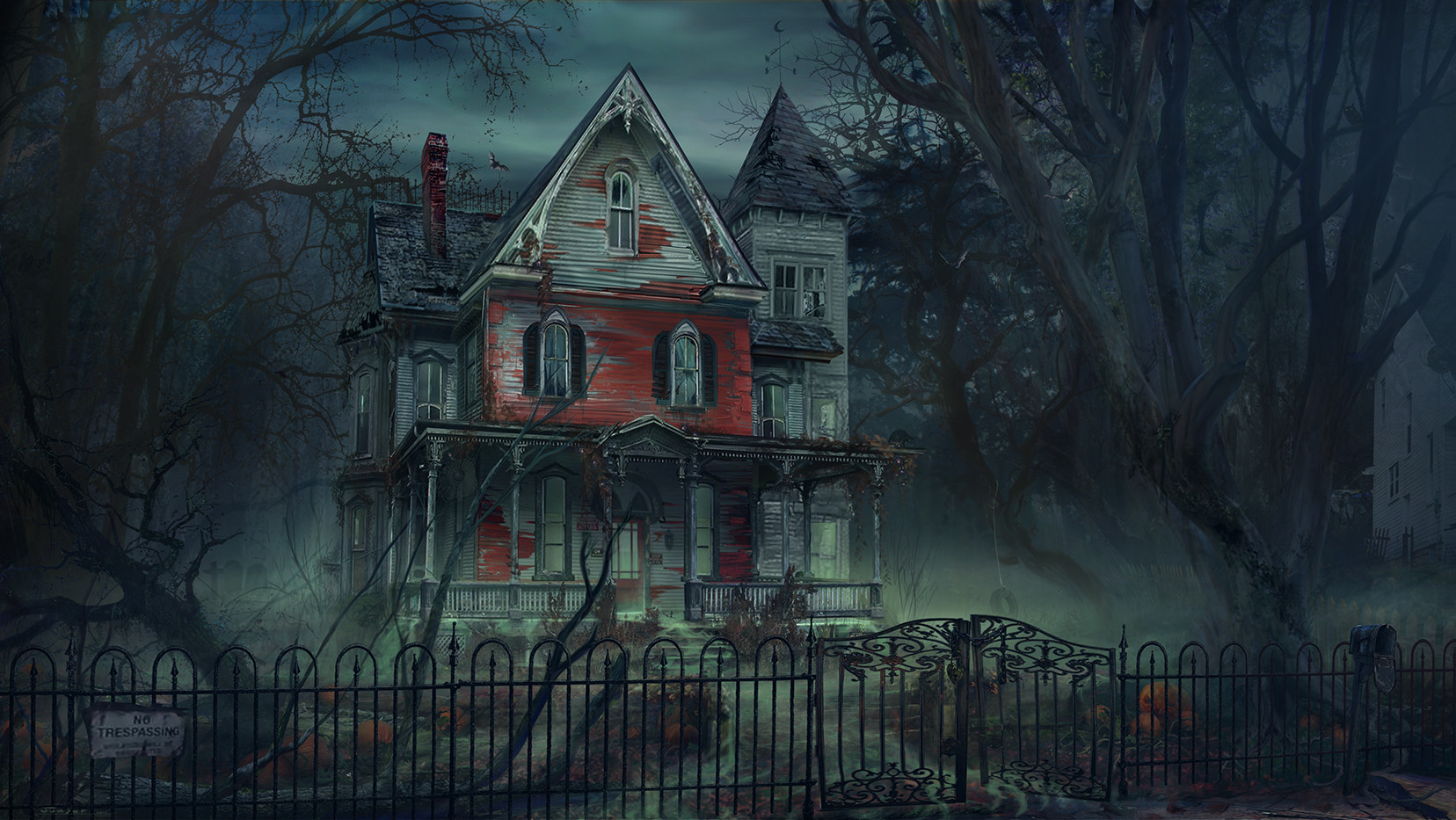
https://cdna.artstation.com/p/assets/images/images/007/700/388/large/jeff-jumper-hauntedhousebynight2.jpg?1507925785

When I was seven years old my ten year old brother Jamie was kidnapped, or so they say. The police claimed whoever had taken him were ‘professional’ in doing so. That I had been incredibly lucky to have not been taken as well. They described the kidnapper in this way because no finger prints were ever found on any of the furniture. My brother had never made a sound at the time and most importantly, there was no sign of a break in at all. None of the windows had been broken, the doors weren’t busted. Nothing.

Several days before his disappearance my father found a painting while rummaging around in the attic. He had been trying to find his old bass guitar after I had asked him if he played any instruments. Turns out he used to play in a band with some of his friends, and was a pretty decent player. His group was called ‘Serrated Edge.’ Unfortunately after an hour of searching the guitar was never found, but the painting was. It had been placed against a wall and surrounded by boxes, my father had noticed the golden frame glinting as he walked around.

The painting itself was magnificent when he lowered it down. It seemed to be in good condition despite being in the attic for so long. There was a house in the picture, a large grey house surrounded by grass. In the background a cliff could be seen, then a sudden drop which evened out to an ocean. It stretched on into the distance. Some birds could be seen up above circling the house. On the back were scrawled some words in red ink that read ‘Gadael ei ben ei hun.’ My mother recognised it as welsh, we didn’t know what it meant at the time. My brother and I weren’t very ecstatic about having it as a new house decoration, but my father loved its simplicity. He decided to put it up our bedroom.

That night we had dinner as usual, spaghetti I believe, then my brother and I went upstairs for bed. We both shared the same room. We were slightly afraid of the dark so our door was left ajar most days, letting some of the light seep in. After getting changed into our pyjamas and joking around for a bit we both settled down to sleep.

It was around 2:00am when I awoke. I realised I was hot and sweaty so pulled myself into a sitting position. Jamie was in his own bed to my left, sleeping soundly. My throat was parched, so I figured I’d get a drink of water. I pulled myself out of the bed sheets and left the room as quietly as possible, creaking the door open. Slowly I crept down the hall, conscious that the floorboards creaked. The last thing I wanted to do was wake everyone up. I headed into the bathroom.

When I returned I was refreshed, and pulled myself back into bed. I had pretty much stood my head under the tap and lapped up water like a cat, cupping it in my hands and splashing my face as well. As I pulled myself back into bed I noticed something odd about the painting on the wall. There seemed to be a black smudge to the right of the house, something I hadn’t noticed earlier. Curiously I pulled myself back to my feet and approached the painting, as I couldn’t quite make it out properly in the dark.

On closer inspection I gathered that the smudge was some sort of man, it resembled a human but was completely black. It looked like it was standing stationary, looking outwards, its head was cocked ever so slightly to one side. I considered waking Jamie to show him the mysterious figure but decided he’d be cranky if I did so, I’d wait until morning. I retreated to my bed.

When morning arrived the figure was gone, to my dismay. I told Jamie about the figure but he didn’t seem to believe me. For the rest of the day I watched the painting suspiciously, believing that it may appear again at any moment. It didn’t.

As my brother and I were climbing back into bed that night I had forgotten about the figure. That is, until the same thing happened again. Just as before, I awoke in the early hours of the morning, soaked in sweat. This time I anticipated the figure’s arrival, and glanced at the painting straight away. I felt a twinge of fear. The smudge was there again, but it had moved, and it had doubled in size. It had adopted a new position, right in front of the house, a few metres away from the front door. Instead of going over for a closer inspection I forced myself to go back to sleep, hoping with every fibre of my being that I was dreaming. That night I fell asleep shaking in fear.

The next day was uneventful. I avoided the painting for the most part, spending time in living room downstairs watching TV. I mentioned about the dark figure to my parents that day, and of course they didn’t believe me.

‘You were just dreaming, Harry, that’s all.’ They told me. This was the last day I ever spent with my brother.

That night I had awoken at a similar time again, around 2:00am. I can’t remember exactly what time. With dread and fear churning in my stomach, I reluctantly glanced at the painting. It was completely black. I remember physically shaking in terror, believing that if I made the slightest noise I would trigger something. Slowly I pulled myself out from under the bed sheets. I crept over to the bedroom door and then ran over to the bathroom, the floorboards creaking as I went. I locked myself inside. I figured I’d stay here until morning, then ask my father to put the painting back in the attic the next day. There was obviously something wrong with it, I just didn’t know what.

What happened next will stay with me for as long as I live. After several minutes of waiting in the bathroom I heard the floorboards creak in the hall outside. At first I thought my brother had woken up, disturbed by my footsteps running down the hall. The creaking was approaching the bathroom, and stopped just outside the door.

‘Jamie?’ I whispered. No response.

I knew someone was standing right on the other side of the door. I just couldn’t figure out what they were trying to do. Did they need to use the bathroom?

‘Mum?’ I said. To this I heard a scratching sound on the other side of the door, as if someone was dragging their fingers across it. I backed away, terrified. After a moment whoever it was walked away, their footsteps creaking their way towards my room.

The next day I awoke in the bathtub to the sound of banging. It was my father, he was thumping the outside of the door with his fist.

‘Harry? Jamie? Are you in there?’ He snapped.

I answered it slowly, stiff from lying in such an uncomfortable position. Apparently this morning when my parents had awoken they had found our room empty. My Mum went downstairs to find us and my Dad looked around upstairs.

‘Is your brother in there with you?’ He had asked when I opened the door. I shook my head but he didn’t believe me, and pushed past, searching the room. It was only after another half hour of searching that my parents began to panic. The police were called around. Everyone was convinced someone had broken into the house and taken him in the night. The police believed I had locked myself in the bathroom to hide from the kidnapper, out of fear. They questioned me relentlessly about whether I had seen his face, I couldn’t answer.

There was something else. On the outside of the bathroom door there were three deep gouges, diagonal from top left to bottom right. The police believe they were caused by a knife, repeatedly dragged across the surface. They claimed that the kidnapper had been trying to get me as well, but had thankfully given in. Our house was closed off for several days and we were provided with a hotel, while the police searched for fingerprints or any signs of breaking and entering. As I said at the start, they found nothing.

When we finally returned to our home my parents were a teary mess. They moped around slowly, answering my questions with one word answers. I knew anything I said about the painting at this point was useless. No one ever seems to listen to children in times of need. They continued to act like this for half a year. It was a horrible time.

Returning to my bedroom after everything that had happened was horrible. I remember crying when I saw my brother’s empty bed. His toys that were still scattered across the floor, toys he may never be able to play with again.

Before I turned to leave the room I glanced at the painting one final time… and noticed something peculiar. There was no dark figure, but there was something strange in one of the house windows. Curiously I approached and looked closer.

It was a face. A little boy. And from what I could tell he looked the spitting image of my brother. His face was contorted into one of terror, and he had tears streaming down his face. His hands were both pressed up against the glass.

Several months later the police gave up on the search. His funeral was held on April the 12th, to this date the saddest day of my life. After that all we could do was get on with our lives. I showed my parents the painting but they shouted at me and stashed it back in the attic. They thought the boy had been in the painting all along, that I was simply imagining the resemblance.

I’m thirty eight years old now, and have a place of my own. When I eventually left my old home I made sure to take the painting with me. For I am the only one who truly knows what happened to my brother.

The dark shape I saw all those years ago was some kind of entity, something evil that intended to trap us both in the painting for an eternity. It succeeded with my brother, but I had locked myself in the bathroom, so had been saved.

I keep the painting in the attic now, in case one day I might be able to free him. I can’t lose hope, like my parents did. After researching I found out that the words on the back of the painting, ‘Gadael ei ben ei hun,’ – had been a warning. It translates to English as ‘LEAVE ALONE.’ Sometimes, in the dead of night, I’ll hear a thumping sound coming from up there, footsteps roaming around in the attic. I’ll always shout my brother’s name, in hope he may have finally been let out. I never get a response.


Credits to: Meek

Saturday, March 25, 2017

Poisoned Oak

https://www.almanac.com/sites/default/files/styles/landscape/public/image_nodes/poison-oak-identify-treat.jpg?itok=987uFt_Z

That’s the problem with cutting down a tree.  No one tells you how dangerous it might be.  Sure they’ll warn you about falling branches, and staying out of the way while the job is being done, but that’s not what I’m talking about.  I’m talking about how the tree you are about to cut down might be the only thing standing between you and something very bad.  Maybe that’s the reason trees have been the object of worship throughout history.  Could it be because they are extremely good at keeping things out of our world that we don’t want in it?  Or it could be that it wasn’t the tree that was being worshiped, but rather whatever it was that the tree was keeping at bay?

Unfortunately for me, the reason our ancestors started worshiping trees in the first place is something that most of us have long forgotten.  Until now.

I bought the house in the spring of 2009. It was on the Old King’s Highway that cuts through Connecticut between New York and Boston. While it no longer qualifies as a highway by today’s standards, it is still a fairly busy road.  There is a nice historical marker in the front yard of the house claiming that it had been built in 1700.  Of course the previous owners (of which there were many!) had made many improvements to the original house over the years so it had an updated kitchen and bathrooms.  It also has a lot of old growth oak trees in the yard.  I believe they are black oaks, but I’ve never been one to care that much about this oak or that oak.

There was one particular oak tree in the back yard was bigger and more majestic than any of the other trees in the yard.  Its trunk must have measured 6 feet around.  Occupying the center of the back yard, all the other trees seemed to defer to it.  A tree house or a swing would have seemed right at home in this tree, but it had neither.  There was a nice spotlight at its base that pointed up and illuminated the tree at night.  Day or night, the oak was really nice to look at and best of all it provided excellent shade for the back deck on hot summer days.

And then it started to die.

I can’t really pinpoint exactly when it started to die, but in the spring of 2010, when the leaves began to come out, I noticed that a couple of the top branches stayed bare.  I didn’t think it was cause for any immediate alarm.  If they stayed bare, I’d just have them removed.  So when they were still leafless in the middle of June I hired an honest tradesman to come over and take those branches down.  He and his team made quick work of it, and I didn’t think anything about the fact that they broke one of their buzz saws on the first branch they tried to cut off.  I figured it was a tough old tree, and a broken buzz saw was one of the hazards of the job.

A couple of weeks later I noticed that on some of the other branches on the top of the tree the leaves had started to wilt and turn brown.  As the wilting and dying began to spread to additional branches I became more concerned.  By the end of July the bark on the branches where the leaves had first died began to slough off and accumulate at the base of the tree.  It was time to seek professional help so I called in an arborist.  She examined the tree and quickly came to the conclusion that it was suffering from something called hypoxylon canker.  And the really bad news was that there is no known cure for hypoxylon canker once the symptoms have appeared.  The disease is internal and kills the sapwood of the tree.  The mighty oak was going to die within months.

It was shortly after getting this grim diagnosis that I noticed something else.  My wired-haired dachshund Baxter had a habit of lying down at the base of the trees in my back yard.  In the dog version of “hope springs eternal”, he was convinced that a squirrel would one day be stupid enough to climb down the tree into his waiting paws, and barring that, perhaps fall out of the tree.  He spent his days this way under every oak in the back yard at one time or another.  Except the one that was dying.  At first I imagined that he could sense impending death in the dying oak.  But that wasn’t it.

After some observation I realized that he didn’t bother lying under that tree because there were never any squirrels in it.  I could see squirrels in every other tree in my backyard.  But not in the dying oak.  Not only that, there were no birds in the tree either.  Not a single bird on any branch, regardless of whether the branch still had leaves or not.  That hadn’t always been the case with the dying oak.  It had formerly been full of squirrels and birds.  I considered it strange, but didn’t really give it too much thought.  There wasn’t really any logical reason why animals would avoid a particular tree.   Little did I know at the time that I was right about there being no logical reason the animals would avoid a certain tree.  It wasn’t the dying tree the squirrels and birds were avoiding.  It was something else entirely.  And as the tree died, it was getting closer to getting out.

Through the rest of that summer and into the fall the tree continued to lose leaves and bark.  It was apparent to anyone looking at it that it was dying.  It occurred to me to have it taken down and be done with it, but I couldn’t bring myself to do that.  I had the weird sense that the oak was fighting back, and not simply bowing to the inevitable.  If that was the case, I was going to give it every opportunity to succeed.   But branch by branch the tree continued to die until only the lowest ones had any leaves on them.  By now it was October and all the oaks began to lose their leaves, so by the time all the trees were bare I couldn’t be sure whether the dying oak was gone, or it would once again sprout some leaves the following spring.

The footprints appeared in March.  We’d had a late winter snowfall of about 6 inches of snow, which had tapered off in the early evening of the 20th.  I remember the date only because the next day was the vernal equinox–the first day of spring.  When I woke up on the morning of the 21st and looked out the back window of my bedroom I noticed several pairs of footprints in the backyard leading up to the dying oak.  The footprints then spread out around the tree in a circle at the base.   I threw on some clothes and a coat and then, accompanied by Baxter, went out to investigate.  I gave Baxter a brief look of reproach as we left the house and his expression seemed to say “Well apparently you didn’t hear anything either”.  It wasn’t easy to determine exactly how many people had been in the back yard, but my guess was around six.  By the look of things they had formed a circle around the tree.

I didn’t have any idea who they were or why they had come.  It occurred to me that this may have not been the first time they had been there.  The only reason I knew about this visit was the footprints in the snow.  There was no other evidence that people had been there.  I followed the footprints out of the back yard to see where they had originated.  They dead-ended at the street in front of my house, which had been plowed earlier in the morning.  So all I really knew was that a group of people had come into my backyard sometime during the night and gathered around the dying (or maybe dead) oak tree.   Their purpose for the visit was a mystery to me.  I decided that the best thing to do was to start leaving the spotlight at the base of the tree on all night.  If they intended to make another visit, that might act as a deterrent.

Soon the weather started getting warmer and the trees in the yard began to sprout buds of new leaves.  I waited anxiously to see what would happen to the dying oak.  Was it dead, or did it have some life left in it yet?  As the days went by it eventually became clear to me that there would be no new leaves on the tree.  It was gone.  It saddened me more than I expected to see the dead tree surrounded by new life in the backyard.  The sooner I had it removed, I decided, the better.  In early June I contacted the honest tradesman who had earlier removed the dead branches and asked him to come back and remove the entire tree, including the stump.

I was still on the phone with the tree service looking out the back window at the tree when I first noticed what appeared to be a symbol carved into the trunk.  Making the appointment for later that week, I hung up and went out into the yard to take a closer look.  Sure enough, something was carved into the tree’s trunk.  It was plus sign with a circle or ring surrounding the intersection of the lines.  The intersecting lines measured about six inches each, and the diameter of the circle was around four inches.  I had no idea who had carved it there, though I suspected it was related to the footprints I had seen in the snow back in March.

I took a picture of the carving with my phone and uploaded it to Facebook to see if any of my friends recognized what it was.  Within an hour one of them posted that it resembled a Celtic cross.  Sure enough, when I compared my picture to images of other Celtic crosses I found on the web, that’s exactly what it was.  Specifically the pre-christian version before the cross morphed into the christian cross.  Now that I knew what it was, it was time to figure out why it was carved into the tree in the first place.  A little research was all it took to learn that the symbol was used by the pagan Celts as protection against evil spirits and spiritual dangers.

Armed with this new knowledge, things began to fall into place (or so I thought).  I came to the conclusion that some local wiccans/druids/whatever you want to call them had zeroed in on my dying oak and come to the conclusion that it represented a threat in some way.  That would explain the visit on the spring equinox–the oak tree played a central role in the druid rites associated with it (you can learn a lot very quickly with the Internet!).  And the same folks had likely been the ones to carve the Celtic cross into the trunk.  I guessed that both of these actions were efforts to remove whatever threat they supposed the tree represented.  My plans were a bit more modern–cut it down.

Over the next couple of days I noticed that the dead oak started to lean to the right.  Each morning its lean was a little more pronounced.  It was as if someone or something was pushing it out of the way.  Baxter started to avoid going anywhere near the tree.  Which was interesting because I had assumed the digging at the base of the tree was his work.  Most of ithe digging was on the side of the tree opposite from the direction in which it leaned.  My mistake was to assume that something was digging into the ground at the base of the tree rather than digging out.  Frankly, it would have been difficult to tell the difference.  In any case, with the lean getting worse, I grew more anxious to get the tree down.

As planned, on Friday morning the tree crew showed up ready to take it down.  If any of the team noticed the Celtic cross carved into the tree they didn’t mention it.  They went right to work starting with removing the top branches first.  As they worked their way down the tree I tried to ignore the growing unease I felt.  It seemed irrational, but nevertheless the feeling lingered.  Around midday the tree seemed to give a slight lurch further to the right, knocking one of the men cutting the branches off balance and causing the branch he was working on to suddenly break off.  It fell to the ground and delivered a glancing blow to one of the other men.  It hit him hard enough to knock him to the ground, and when he stood back up it was obvious he had dislocated his shoulder.

After the hurt worker was loaded into one of the trucks and driven to the ER to get his arm looked it, the remaining men went back to work on the tree.  By early afternoon the only thing left was the stump.  The smaller branches had been loaded into the wood chipper and chopped into small pieces.  The larger branches and trunk were cut into small logs and loaded on the back of one of the trucks.  They now brought in the stump grinder and turned what remained of the trunk and visible roots  into a pile of wood chips that were then shoveled into the back of one of the trucks. After that there was nothing left to do but to pack up, and as they prepared to leave I thanked them for their work.  Then it was just me and Baxter in the backyard.  I walked over to where the tree had once stood.  I would need to put sod over the area.  It was now just a few scattered wood chips and loose dirt.

That was three days ago.  A lot has happened since then.  The first morning after the oak was cut down I noticed there was a hole in the ground where it had stood.  It wasn’t very large, but it looked impossibly deep.  Even if Baxter had the nerve to go near the spot, it wasn’t a hole he could possibly have dug.  The second morning the hole was bigger and still impossibly deep.  Around the edges of it was bits of fur and pieces of bone of some unidentified animal.  There were also markings in the dirt that looked like it had been clawed by a very large animal.  The claw marks radiated outward from the hole.  I spent the rest of that day getting bags of dirt from the Home Depot and filling in the hole.  Only it never quite filled up

That was yesterday.  This morning I woke up and found the hole was back and bigger than ever.  There were footprints of several different people in the dirt around the hole.   It wasn’t like the time they had appeared in the snow, rather it looked as if there had been some kind of struggle.  The only other thing I found in the dirt with a necklace with a Celtic cross hung from it.  The necklace was broken, but I put it in my pocket anyway.  That was 12 hours ago.  As it got dark I started to hear noises coming from the backyard.  Baxter didn’t come back from his after dinner trip outside, and didn’t come when I called him.  I did eventually hear him start barking.  And it wasn’t a confident sounding bark. Baxter sounded terrified.

I’m beginning to suspect that it was never the tree that was the danger.  The ceremony on the spring equinox, the Celtic cross carved into the tree were both designed to give it the ability to continue its job as jailer even if it died.  Cutting it down was likely the last thing I should have done.  And now something has come up from underneath where the oak once stood imprisoning it.  I don’t know what it is, and I don’t know what it wants, but I hear it outside the house’s back door.  Baxter’s barking stopped long ago with a strangled yelp.  Maybe between the broken buzz saw and the dislocated shoulder the oak had been trying to tell me even a dead tree is better than no tree.  I don’t think I will ever know the answer to that.  That’s the problem with cutting down a tree.  No one tells your how dangerous it might be.


Credits to: photofreecreepypasta

Friday, March 24, 2017

Thousands


You crawl into bed at around nine. Funny, that’s a little early for you, but you don’t seem to care. You toss and turn for a few minutes, before you feel it. Somebody’s watching you, you’re sure of it. You scan the room, finding nothing, but you still feel uneasy.

You lay back down, facing the room. You shut your eyes and try to sleep, but you can’t. You still feel the eyes on you, watching you.

You pull the covers over your head, and the feeling fades. You relax and close your eyes, but as soon as they shut, the feeling returns. You’re scared to move the covers, to search for the eyes that you know are watching you.

You’re terrified, but you yank the covers down, and as you do your heart skips a beat. You scan the room, seeing absolutely nothing yet again.

The feeling disappears, and you scold yourself for acting like such a child. You roll over toward the wall and quickly fall into a peaceful sleep.

But let me ask you this: Do you know how many hiding places there are in your room?

I do. Thousands.


Credits to: photofreecreepypasta

Thursday, March 23, 2017

The Vault of Humanity


https://wordpress.bigissue.com/wp-content/uploads/2020/03/Seed-Vault-Norgen-hero-1530x860.jpg

In the year 2005, the Humanity Archival Storage Project was commenced by leading government officials, scientists and academic alumni across the world due to the fear that humanity’s treasures were increasingly threatened by war and natural disasters. The project was one of the most complex undertaking in our species history: the creation of an archive of humanity’s knowledge and culture. The Archival Symplexical Computer was designed in the early days of the project. The device was composed of iron, the most stable of elements, and built to stand as a testament to our species for millennia.

After the construction of the ASC, I was assigned to the HASP team. We were a diverse bunch, consisting of representatives from the fields of science, history, the arts, and every other possible area of human study. Our task was to program the device with the information and artifacts worth preserving. Our group started off cordially enough, but we quickly broke down into sects and factions as we started fought viciously over what would be saved. The artists wanted musical samples and paintings saved, the historians wanted their nations’ prized documents included and the scientists wanted their formulas and theories preserved. Eventually, through a series of backroom deals and shifting alliances between disparate groups, a compromise of sorts was reached and onto the device went the formulas of Newton and Einstein, the plays of Shakespeare, the music of Mozart, the paintings of Picasso and many of the other great discoveries and creations of humanity.

In 2012, it was finally time to store the device. Locations around the world were scouted out, ranging from the Himalayas to the bottom of the Atlantic. Eventually, a decision was made to place the ASC beneath the Sweeney Mountains in Antarctica. The location was free from war and fault lines. The frigid code would even slow down wear and tear on the machine, extending its lifespan for another millennia or so. It was the perfect place to station the device.

Construction of the ASC vault started in 2013. The process took another year, but eventually the construction team reached suitable depths. I was there for the opening ceremony, as a drill team dug through the last twenty or so feet to reach appropriate levels for the ASC vault. At around noon, I heard the drilling stop. I thought they had finally reached acceptable levels, but the loud screaming that quickly filled the air freed me from this thought. A rescue team was sent in, but they reported that the drillers had hit a cavern hundreds of feet deep.

A rescue operation was quickly launched, but all that was left of the team was corpses and smashed machinery. They had simply fallen from too great a height for there to be any survivors. During clean-up, the body recovery team discovered something rather unusual: an ASC-like device wedged into the corner of the cavern. The device was nearly five-thousand years old.


Credits to: photofreecreepypasta

Wednesday, March 22, 2017

The Washday Demon


My mother, dead now these past eighteen months – may God rest her soul – was a fanatically superstitious woman. Her ancestry, a combination of strict Catholicism and Irish folklore, had resulted in a potent blend which caused her to view life as a series of potential transgression (some valid, some merely fanciful) which might culminate in any one of a million unwanted outcomes should she step over some mystical line.

It was a matter of good fortune for me that my father, although a virtuous man, was totally lacking the imaginative capacity to believe very much in either religion or superstition. He would acquiesce to my mother’s demand that spilled salt be thrown over his shoulder where, she firmly assured us, it would hit the Devil square in the eye. Keys, errantly placed on the table, would be removed by him and the underside of ladders were always avoided. All these sanctions were borne well by him and he always played along with a look of mild amusement, total disbelief or loving indulgence, according to how whimsical mother’s demand might be. Never once did I hear him shout at her for the stupidity of her beliefs, nor did he ever refuse to play along. In time, I too learned to humour my mother and indulge her many whims. I walked a line between them and viewed the world of lore with a healthy scepticism and a pinch of open-mindedness.

Of all the stories my mother told me however, the one which scared me most as a child was the one about the Washday Demon. This was a potent morality warning, combining elements of superstition and retribution for wrongdoing. According to mother, if a housewife, or female homemaker (my mother had escaped the subtleties of women’s lib, but was nonetheless able to incorporate single women into her story) committed a black enough sin – such as shoddily darning her husband’s socks – she would be visited by the Washday Demon. This was a foul creature from the pits of Hell, who would pop up and visit the transgressing woman every washday, ensuring that her clean laundry would become inexplicably marked and soiled as it hung on the line. My father found this concept particularly hilarious – if the worst a woman had to deal with for her sins was a mucky-fingered pixie and some soiled linen, then the majority of womankind could happily sin away. Mother, however, always seemed to regard the concept of the Washday Demon with a little more gravity than any of her other bogeymen and hexes. I believe that it was this increased earnestness which made me particularly uncomfortable as a child.

My mother’s own washday was always a Wednesday and, more often than not, as I sat at her feet, watching her peg clothes on the line (undergarments always respectably hidden behind the sheets), she would raise the subject of the Demon. “Let’s hope the Washday Demon doesn’t come in the night and stain our clothes, Meg,” she would whisper. But in all the years that my mother hung up her laundry, he never did. In fact, the Daz doorstep challenge had been invented for women like my mother, and her clothes always glowed with a holy whiteness.

For all this, mother continued to obsess about the Demon. She claimed that when she was a child, her neighbour had been visited by him. Overnight the woman’s laundry became stained and foul smelling and no matter how many times she re-washed it, it refused to come clean until, finally, the woman went mad. I wondered why someone might go mad over dirty laundry, but my mother went on to tell me that the soiling of the washing was always accompanied by some other manifestation – a tangible by-product of the woman’s wrongful deed, and it was usually this which caused the woman’s fear.
 
The only way to appease the Demon, whispered my mother, was to acknowledge your wrongdoing – not as easy as it might appear, since the Demon could swing by years after a woman’s act of naughtiness. After pinpointing the problem, the woman in question would then have to burn every item of clothing and linen in her house, along with a lock of her hair, as an offering to the Demon. If she failed to do this, the mark on her soul would grow too large to eradicate and her sin would be discovered. Worse still, the Demon, a fractious and mischievous spirit who craved acknowledgement, would twist her wrongdoing into something far worse than it had originally been.

As I grew older, I heard the story less. Eventually, it was nothing more than a vague childhood memory, sharing limited space with all the other childish fairy tales I had heard throughout my youth. When I was eighteen, I moved out of my parents’ house and into a place of my own, by which stage the Washday Demon was a thing of the past. It wasn’t a hugely ambitious relocation, given that I bought a little terrace house a few doors down from them. It sat almost at the rear of my childhood home, separated by a tract of common land which ran in a strip between the back gardens of two rows of houses.

I remained close to my parents, up until my father’s death five years ago and my mother’s recent passing, but having my own place gave me a sense of freedom that I had never felt before, releasing me from the rituals of my mother’s superstition. Rituals which, thankfully, I didn’t feel compelled to take with me.

Since that move, eight years ago, I had barely thought about black cats and Washday Demons, except with an occasional sense of vague nostalgia. I certainly didn’t have cause to fear my mother’s shadow-demons until, that is, last week.

It’s odd but despite the superstitious conditioning of my childhood, the Washday Demon wasn’t the first thing I thought of when I saw the strange shaped mark on one of my white bed sheets. It appeared as a small, irregular handprint and as I peered closer, I saw that it had five long streaks above where the fingertips ended. The whole thing was dark brown in colour and stood out starkly against the purity of the rest of the sheet.

My first thought was that one of Sophie’s kids, from next door, was responsible. They were forever kicking their ball into my garden and letting themselves in the back gate to collect it. I tossed the sheet back into the machine to await the next wash load, thinking that I would let it slide this time. If the little buggers kept getting chocolaty hand marks everywhere, though, I’d have to speak to Sophie about it.

A couple of days later I was in the village running a few errands. I had just cut through to a maze of back alleys, shortcuts behind the shops when I sensed a presence behind me. Swinging round, I saw a child, eight or nine years old, silently following me. He had fluffy blonde hair which stuck up, chick-like, around his head and would have been cute or funny if it weren’t for his eyes. In twenty-six years, I have never met someone with eyes that have chilled me, far less the eyes of a child. For that matter, I have seen very few photographs of convicted killers who have managed to convey quite so much hatred and evil with their eyes alone. There is the infamous photo of Myra Hindley, but even then the image is flat and two-dimensional – seemingly very far removed from one’s own reality. The child’s eyes weren’t. Almond shaped and icily blue, they appeared to be sunk deep into his skull. A predatory, watchful gaze hooded them slightly, and this would have been disconcerting enough on its own. Disconcerting even without the air of full-bodied hatred which sparked off of them, like embers from a grinding stone.

All of this I took in, briefly, in the moment before I turned my back on him and stepped up my pace through the winding alley. It had been my intention not to look back, so unnerved had I been by the child. It was, however, this very sense of unease, heavy as a storm cloud, which forced me to turn again, almost against my will. His evil drew me like a magnet – he was an unwanted fascination; the accident at the side of the road which we glance at, even as we vow to avoid it.

Had I not looked back, I wouldn’t have seen his hands, which now hung limply at his sides. On each of his fingers, reminiscent of Chinese Mandarins, protruded long-taloned nails, curled under in a perfect arc. That time when I turned away I didn’t walk – I ran.

When I returned home, I busied myself with household tasks, tidying and dusting and putting on another wash. Still, at that point, I didn’t think of the Washday Demon. The child, I told myself, was part of a traveling group, just passing through. He’d meant me no ill-will, I had simply overreacted. I continued to tell myself this until, that evening, something pulled me out of a dreamless sleep and urged me to my bedroom window.

Flipping the curtain aside, I saw him there, in the center of my moon-washed garden. He was running a long nail tenderly, almost lovingly, down my newly washed sheet. As though sensing my presence, he glanced up and caught my gaze, his eyes hooding almost imperceptibly. Then, in a whirligig of impish delight, he set about ripping my sheets to shreds – his legs, arms, feet, hands all moving in a grotesque dance of destruction. When he had finished, he looked up again, triumphant and brooding, before setting each of my clothes pegs spinning with one hooked nail. Then he set off at a jog towards the back gate, letting it slam hollowly in the empty silence.

The next morning when I ventured into the garden, every item of laundry was either shredded or stained with his dirty handprints. Moving closer, I now saw that it wasn’t chocolate, as I had first thought, but dried blood. After all the years I’d spent denying my mother’s stories, it seemed that I had my very own Washday Demon. I also had a pretty good idea why he was there.

Within half an hour I had collected every item of clothing and linen in my house – from the timeless Chanel suit I’d spent months saving for, to my plain white sheets monogrammed with my initials – MJP- bought for me as a joke by my best friend when I’d first moved into my house. Everything dear to me was piled high on a bonfire of broken twigs.

I had just struck the second match, and set the whole lot smoldering nicely, poking it with a stick, when my front doorbell rang. Ignoring it, I continued to stir my offering – asking the Demon to remove the stain from my soul. The doorbell again, and then a pounding at the gate. Standing there, stick in hand, I watched as the latch unclipped itself and four policemen threw themselves into my garden. “Megan Patrick,” one said, and I nodded, even though I knew it was a statement, not a question. “I’m arresting you on suspicion of murder.” A blur. An awareness of water being thrown onto fire and a hiss as it died, along with any hope. Someone yelling: “There’s blood on these sheets too. She’s tried to burn the evidence, but it looks like there’s enough left to make a match.”

Then I was being dragged out of the back gate and down the no-man’s-land between the houses. Back towards the tract of land behind my parents’ house. Already there was the fluttering of yellow crime-scene tape, squaring off a small portion of mud. I was pushed forward and glanced into the hole and there, wrapped I was told in one of my monogrammed sheets, was a child of eight or nine years old. I knew his age, even though he was decomposing; flesh and bone falling apart. But he shouldn’t have been a child.

“No,” I screamed, wanting to speak it out loud, “not a child.” A baby, yes.

That was my sin. Pregnant at seventeen in a small community, with a devout mother. Instead of doing something immediately, I waited until I had missed six periods and then I turned one of my mother’s knitting needles on myself. I hadn’t expected the baby to be so formed; so perfect. Nor had I expected it to be quite so substantial. For a moment, I had been sure that it was still alive, but I hadn’t checked twice. Instead, I had run with my burden, in the dead of night, and scraped a grave in the common land behind our garden, where it had remained undiscovered ever since. That was nine years ago. A baby, unborn, but not this child – whoever, or whatever, it was.

Then I saw it. The hands, skeletal and rotting, were nonetheless finished off with long, curving nails. Nails which had taken nine years to grow – nine years in which a dead baby had also, somehow, kept growing. A youthful misjudgment which had evolved into something very different; a game for the satisfaction of the Washday Demon. A game nine years in the making.

As I watched, I saw the death-head turn towards me and one eye clicked open in a languid, conspiratorial wink, as if to say, “Here I am. I’ve caught up with you at last.” And it was then that I remembered the hair. I had started the fire burning but forgotten to add a lock of my hair. Too late. I knew, just as surely as I knew the blood on my sheets would match this child’s blood, that I could never prove the truth of what had really happened.

The Demon had taken my sin and amplified it in the most hideous manner; turning it into something that no washing in the world would ever be able to remove.


Credits to: photofreecreepypasta

Tuesday, March 21, 2017

The Salt and Pepper Lady


It would seem that all cities, even small towns, have their own ghost stories and urban legends. Living in Devine, Texas for 5 years, I always heard about the Salt and Pepper lady of the Devine Projects. Friends would speak of their experiences with this very strange and disturbing specter. If you grew up in the Devine Projects, your parents wouldn’t allow you to be outside whatsoever after dark, which was less due to the gangs and drug problem and more out of fear of the Salt and Pepper lady.

There were the usual problems as with every low income residential slum. Gangs, drugs, domestic violence, pedophiles. It wasn’t the worst of all the projects but crime was still present. Local police were there often for the usual reasons you would expect from a housing project.  Raids, domestic violence calls, even the occasional murder.

Somewhere in the ball park of about 30 years ago, there lived an elderly resident of the Devine projects known simply as Mona. She was a bitter, nasty, mentally unstable and disturbed lady. Most of all, she was lonely. Nobody could ever recall family or friends ever stopping by to visit her, so it was assumed that she was all alone in this world.

She would yell at the children who played too close to her window and front door.  She would run them off, sometimes saying things about their parents burning in hell and about being sinners. Mona was notorious for walking outside nude when the mood struck her. Sometimes, she would approach the young men hanging out and proposition them. Usually they ran her off or scattered away from her, avoiding her altogether. She was also known to knock on random doors late at night asking to borrow some salt and pepper.

This was probably the most disturbing quirk of all. She would knock and knock, sometimes for 10 minutes. Most people didn’t answer the door. However when they did, she had this creepy smile on her face. Her teeth showing, long stringy grey hair, wrinkled skin, big blue eyes.  She looked like something out of a nightmare. If you wanted her to go away, you had to give her some salt and pepper… then, she left you alone.  In time though, residents became used to Mona’s eccentric antics, as disturbing as they were. She was just another oddity of the Devine Projects.

In time people began to notice she wasn’t screaming at kids, walking around nude or knocking on doors late at night. When rent was due, Mona had not paid on time as she normally did. One cold January morning, the landlord went over to her apartment to collect. After no answer, he let himself in with his own key. Inside he found Mona submerged in her bath tub. The water was a crimson red as she had slit her own wrists. However, the most unnerving sight was that she had also decided to pluck out her eyes. She had also defecated in the bath tub, likely as she approached death.  The smell was very intense and could gag a maggot.

A note was left on the bathroom counter:

"I am sick of this world and all of the filth, lies, deceipt and sinners in it. This place needs to be punished. All I ever wanted here was a friend. You were all just too good to talk to me. You should all burn for it. I’m leaving this world to join my Son Hank and Husband Jim in the afterlife. First, there are some things I need to tend to before hand. You’re all scum and not fit to eat my shit. I’ll be seeing you all soon. ~ Ramona Osterburg"

When the coroner removed Mona, the populous of the projects curiously gathered outside. The general mood that day was one of relief. “Ding dong, the witch is dead,” was to be sung by bratty children throughout the Projects over the next few days.

After about a week, the strange happenings began. People began to report a woman knocking on their doors late at night asking for salt and pepper. Mona was also said to be spotted walking around nude in the complex in the wee hours. Some even said she was seen walking through apartments in the same state as when she expired, eye sockets empty where her big blue eyes once stared from. Being that the projects were mostly occupied by poor, superstitious Mexican families, a growing concern and fear caused a meeting. They had all agreed to bring in a Curandera (Mexican folk healer who also deals with the paranormal world) to come in and cleanse the housing projects… and to rid them of Mona once and for all.

After the blessing and ritual cleansing, the Curandera claimed that Mona was no longer a problem. She had passed onto the next life to join her loved ones. This didn’t hold her at bay for long. Another few days had passed. People were beginning to have horrible nightmares, everyone from children, adults, even gangbangers. She was seen more often walking around the complex and in peoples’ apartments. Often she would knock on their doors in the wee hours asking for salt and pepper. Usually nobody answered the door. Occasionally, the brave ones answered only to find nobody there. When the residents tried to contact the Curandera, she couldn’t be found. All hope was lost and many began to pack up and move out. A few stayed.

As new tenants moved in, the frequency of Mona sightings began to dissipate. However, she can still be spotted walking disfigured and grotesque about the projects after midnight. She still knocks on doors once in awhile asking for salt and pepper, and she can still be seen, albeit rarely, inside apartments and walking around with empty eye sockets. She still appears in the nightmares of frightened children and anyone who lives the wrong kind of life… a life Mona would disapprove of. She is meant now as a warning. Go down the wrong path, and The Salt and Pepper lady will come to get you. Needless to say, crime is way down in the Devine Projects. The police joke around saying Mona is an honorary Devine Police officer being she keeps the criminal element there in check.

This is a real urban legend/story I grew up with when I lived in Devine. The projects still stand… I haven’t been back there in 18 years but I occasionally talk to old friends from there on Facebook. I’ve asked if Mona is still seen around the old projects. They say she is.


(By Blacknumber1)

Monday, March 20, 2017

Pale Luna

https://i.ytimg.com/vi/OAdxfIa3Y7E/maxresdefault.jpg

In the last decade and a half it’s become infinitely easier to obtain exactly what you’re looking for, by way of a couple of keystrokes. The Internet has made it all too simple to use a computer to change reality. An abundance of information is merely a search engine away, to the point where it’s hard to imagine life as any different.

Yet, a generation ago, when the words ‘streaming’ and ‘torrent’ were meaningless save for conversations about water, people met face-to-face to conduct software swap parties, trading games and applications on Sharpie-labeled five-and-a-quarter inch floppies.

Of course, most of the time the meets were a way for frugal, community-minded individuals to trade popular games like King’s Quest and Maniac Mansion amongst themselves. However, a few early programming talents designed their own computer games to share amongst their circle of acquaintances, who in turn would pass it on, until, if fun and well-designed enough, an independently-developed game had its place in the collection of aficionados across the country. Think of it as the 80’s equivalent of a viral video.

Pale Luna, on the other hand, was never circulated outside of the San Francisco Bay Area. All known copies have been long disposed of, all computers that have ever run the game now detritus buried under layers of filth and polystyrene. This fact is attributed to a number of rather abstruse design choices made by its programmer.

Pale Luna was a text adventure in the vein of Zork and The Lurking Horror, at a time when said genre was swiftly going out of fashion. Upon booting the program, the player was presented with a screen almost completely blank, except for the text:

-You are in a dark room. Moonlight shines through the window.

-There is GOLD in the corner, along with a SHOVEL and a ROPE.

-There is a DOOR to the EAST.

-Command?

So began the game that one writer for a long-out-of-print fanzine decried as “enigmatic, nonsensical, and completely unplayable”. As the only commands that the game would accept were PICK UP GOLD, PICK UP SHOVEL, PICK UP ROPE, OPEN DOOR, and GO EAST, the player was soon presented with the following:

-Reap your reward.

-PALE LUNA SMILES AT YOU.

-You are in a forest.There are paths to the NORTH, WEST, and EAST.

-Command?

What quickly infuriated the few who’ve played the game was the confusing and buggy nature of the second screen onward — only one of the directional decisions would be the correct one. For example, on this occasion, a command to go in a direction other than NORTH would lead to the system freezing, requiring the operator to hard reboot the entire computer.

Further, any subsequent screens seemed to merely repeat the above text, with the difference being only the directions available. Worse still, the standard text adventure commands appeared to be useless: The only accepted non-movement-related prompts were USE GOLD, which caused the game to display the message:

-Not here.

USE SHOVEL, which brought up:

-Not now.

And USE ROPE, which prompted the text:

-You’ve already used this.

Most who played the game progressed a couple of screens into it before becoming fed-up by having to constantly reboot and tossing the disk in disgust, writing off the experience as a shoddily programmed farce. However, there is one thing about the world of computers that remains true, no matter the era: some people who use them have way too much time on their hands.

A young man by the name of Michael Nevins decided to see if there was more to Pale Luna than what met the eye. Five hours and thirty-three screens worth of trial-and-error and unplugged computer cords later, he finally managed to make the game display different text. The text in this new area read:

-PALE LUNA SMILES WIDE

-There are no paths

-PALE LUNA SMILES WIDE

-The ground is soft

-PALE LUNA SMILES WIDE

-Here

-Command?

It was another hour still before Nevins stumbled upon the proper combination of phrases to make the game progress any further; DIG HOLE, DROP GOLD, then FILL HOLE. This caused the screen to display:

-Congratulations

—— 40.24248 ——

—— -121.4434 ——

Upon which the game ceased to accept commands, requiring the user to reboot one last time.

After some deliberation, Nevins came to the conclusion that the numbers referred to lines of latitude and longitude — the coordinates lead to a point in the sprawling forest that dominated the nearby Lassen Volcanic Park. As he possessed much more free time than sense, Nevins vowed to see Pale Luna through to its ending.

The next day, armed with a map, a compass, and a shovel, he navigated the park’s trails, noting with amusement how each turn he made corresponded roughly to those that he took in-game.

Though he initially regretted bringing the cumbersome digging tool on a mere hunch, the path’s similarity all but confirmed his suspicions that the journey would end with him face-to-face with an eccentric’s buried treasure.

Out of breath after a tricky struggle to the coordinates, he was pleasantly surprised by a literal stumble upon a patch of uneven dirt. Shoveling as excitedly as he was, it would be an understatement to say that he was taken aback when his heavy strokes unearthed the badly-decomposing head of a blonde-haired little girl.

Nevins promptly reported the situation to the authorities. The girl was identified as Karen Paulsen, 11, reported as missing to the San Diego Police Department a year and a half prior.

Efforts were made to track down the programmer of Pale Luna, but the nearly-anonymous legal gray area in which the software swapping community operated inescapably led to many dead ends.

Collectors have been known to offer upwards of six figures for an authentic copy of the game.

The rest of Karen’s body was never found.

By: thebestcreepypasta

I Talked to God. I Never Want to Speak to Him Again

     About a year ago, I tried to kill myself six times. I lost my girlfriend, Jules, in a car accident my senior year of high school. I was...